Toilet Leak Repair Redwood City, CA
The most expensive leak in the house is often the one nobody can hear. A toilet can lose hundreds of gallons a day straight down the drain — no puddle, no drip, no warning except the bill. Leak Detection Pros provides the toilet leak repair Redwood City, CA homeowners need to stop it: dye-tested diagnosis, the failed part replaced, and the fix verified before we leave.
The Silent Leak That Runs All Day
Most toilet leaks are silent because the water never leaves the porcelain — it slips from the tank into the bowl and down the drain, 24 hours a day. A worn flapper or a failing flush valve seal can waste hundreds of gallons daily, which is why a toilet is the first suspect whenever a water bill jumps with no visible leak anywhere in the house.
There are really three leaks hiding in one fixture, and they behave differently. The tank-to-bowl leak — a degraded flapper or flush valve seal — is the silent water waster. The fill valve leak announces itself with a toilet that refills briefly every few minutes, day and night, as the tank level slowly falls and tops up again. And the base leak — a failed wax ring where the toilet meets the floor — is the quiet property damager, soaking the subfloor a little more with every flush. In Redwood City's older bathrooms, where many fixtures have been cycling for decades, we often find two of the three in the same toilet.
Signs your toilet is leaking, even if it sounds fine:
- The toilet refills on its own — a short fill cycle every so often with nobody using it (the "phantom flush")
- A faint hissing or trickling that never quite stops after a flush
- Your meter moves when every fixture is off — and the toilet is the only thing that runs without you
- Usage in the My Water portal at 3 a.m. — Redwood City's hourly data shows water flowing while the house sleeps
- Water or staining at the base, a spongy floor around the toilet, or a sewer smell in the bathroom
- A bill that jumped while your actual water use never changed
Why Toilets Out-Waste Every Faucet
A dripping faucet loses water drop by drop. A leaking toilet loses it by the tank — a flapper that no longer seals can pass a steady stream, and the fill valve keeps replacing what drains away. That is the arithmetic behind the forum stories of usage leaping by thousands of gallons in a single month: the leak is small, but it literally never stops. It is also why, when a homeowner calls us about a mystery bill, the toilets get tested first.
The Dye Test: Confirm It in 15 Minutes
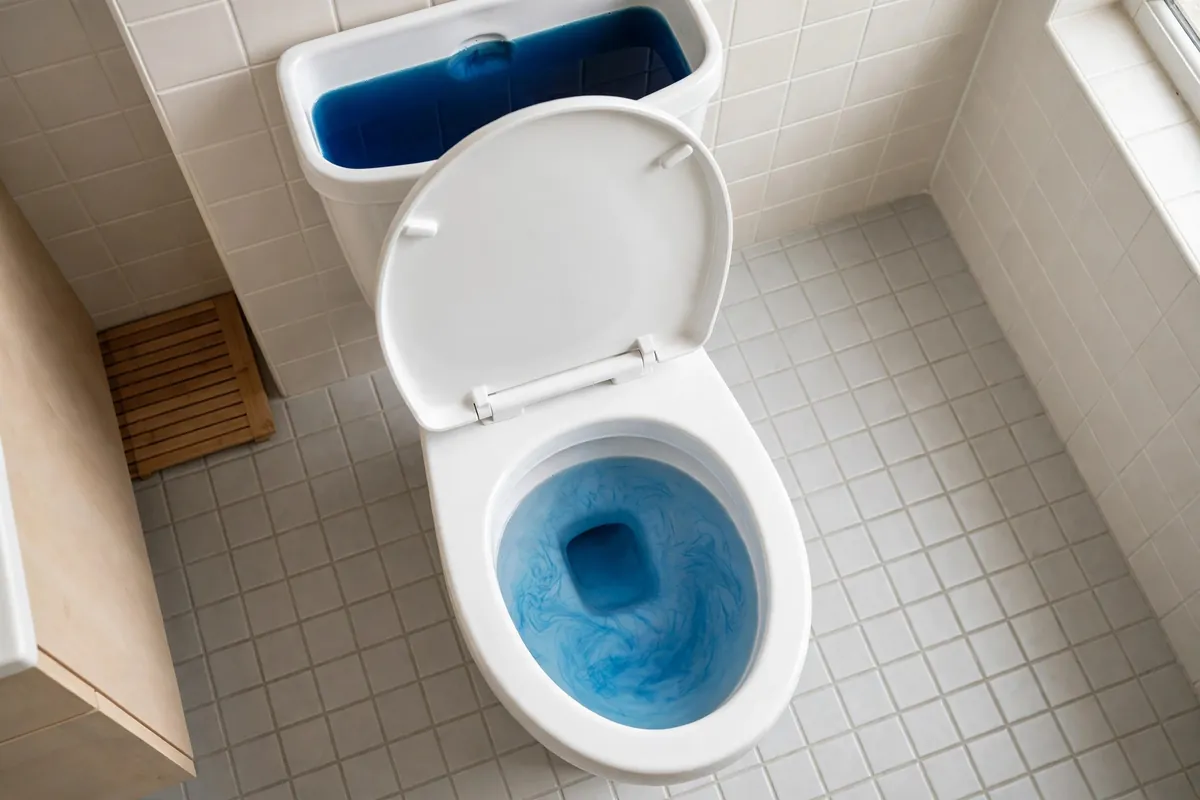
You can prove a tank leak yourself with food coloring — it is the same first test we run. Drop color into the tank, wait without flushing, and if color reaches the bowl, the tank is draining where it should not.
Color the Tank
Remove the tank lid and add several drops of food coloring (or a dye tablet) to the tank water.
Wait — Do Not Flush
Leave the toilet completely alone for 15 to 20 minutes. Use another bathroom if you have one.
Check the Bowl
Color in the bowl water means the flapper or flush valve seal is leaking tank water into the bowl, around the clock.
If the dye test is clean but your meter still moves with everything off, the leak is somewhere else — a supply line, an irrigation branch, a slab or crawl space line. That is when it stops being a fixture job and becomes a detection job, and our full leak detection service takes over from there. If the test does show color, the fix is usually straightforward — which brings us to the repair itself.
What We Replace, and Why
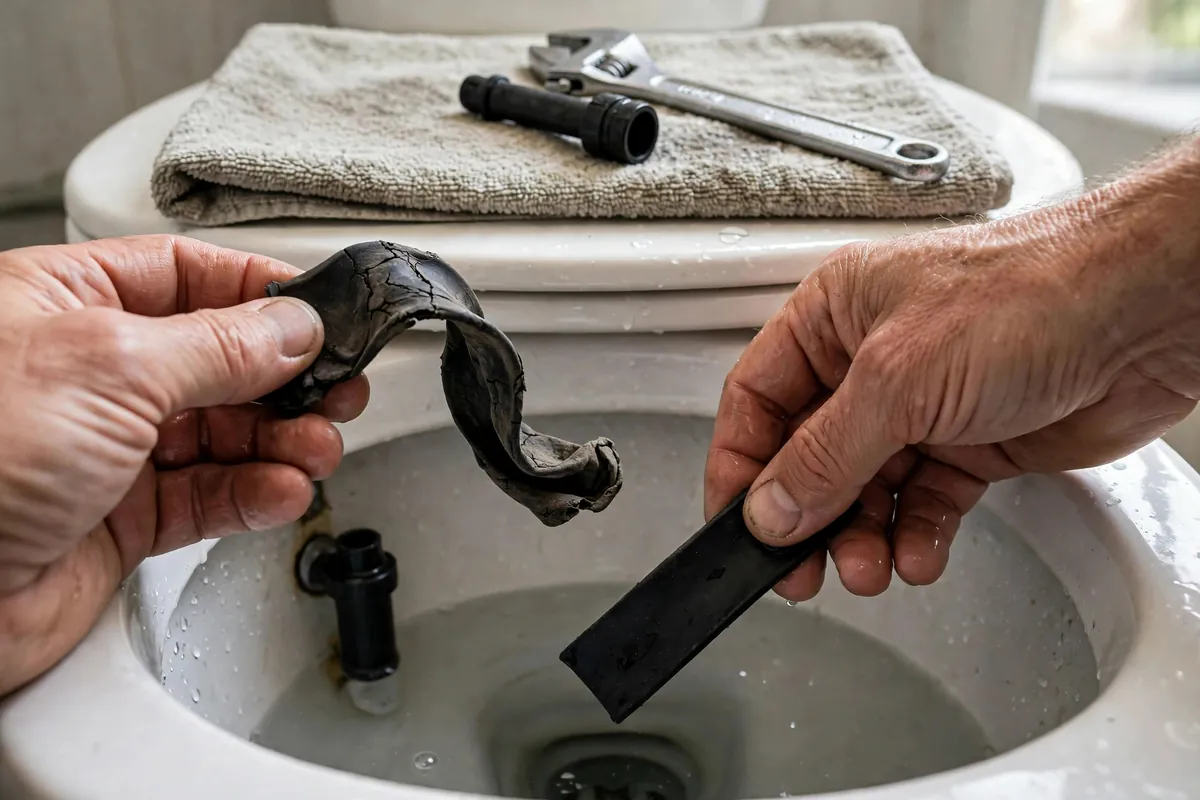
The flapper is the usual culprit — a rubber seal that hardens, warps and stops seating after a few years in chlorinated water. If the flush valve seat it seals against is rough or cracked, a new flapper alone will not hold, and we will show you why before replacing the assembly. Fill valves get replaced when they fail to shut off cleanly or refill constantly. And if the diagnosis points under the toilet instead, we lift it, inspect the flange and floor, and fit a new wax ring — never just caulk around the base and call it fixed, which traps the leak where it rots unseen.
What Toilet Leak Repair Costs
A basic leak inspection typically runs $100–$300 — and against a toilet that can waste hundreds of gallons a day, it is rarely a hard decision. Most tank repairs come down to a flapper, a fill valve or a flush valve seal plus the labor to fit and test it, quoted as a range before we start.
The number that matters is the comparison. A silent toilet leak running through a whole billing cycle can add more to your water bill than the repair costs — and it will do it again next cycle, and the one after. Base leaks price differently, because the cost depends on what the floor and flange look like once the toilet is lifted; we document that with photos before quoting, so the number you approve is the number for the work you actually need. Either way, you approve a range first. No work starts on a mystery.
One Bathroom Down, Whole House Checked
Toilets age together — a house with one failing flapper usually has the same-era parts in every bathroom. While we are on site we will happily dye-test the other toilets too, so you are not booking the same visit again in three months for the guest bath. The same logic applies to the fixtures around them: our faucet and fixture leak repair covers the dripping taps and shower valves that tend to surface in the same season of a home's life.
Related Services
The fixture family ages together — these are the services that pair with this one:
Faucet & Fixture Leaks
Drips, running fixtures and leaking valves — small leaks that quietly add up on the same water bill.
Learn more →Water Leak Detection
Dye test clean but the meter still moves? The leak is hidden in a wall, ceiling or underground line — we trace it.
Learn more →Emergency Leak Repair
A supply line that lets go at the toilet is not a slow leak anymore. Shut it down and stop the damage, day or night.
Learn more →Toilet Leak Questions Homeowners Ask Us
How can I tell if my toilet is leaking silently?
Put a few drops of food coloring in the tank, do not flush, and check the bowl in 15 to 20 minutes. If color shows up in the bowl, water is leaking past the flapper or flush valve seal — the classic silent leak. Other clues: the toilet refills briefly on its own every so often, and your water meter moves when nothing is running.
Can a running toilet really raise my bill that much?
Yes — it is one of the biggest single causes of a mystery bill spike. A toilet leaking around the clock can waste hundreds of gallons a day, and because the water goes straight down the drain, there is no puddle and no sound to warn you. Homeowner forums are full of bills that jumped by thousands of gallons in a month from exactly this.
My toilet flushes by itself every so often. Is that a leak?
Yes — that phantom flush is the tank slowly draining through a worn flapper until the water level drops far enough to trigger the fill valve. It is the same silent leak, just advanced enough to announce itself. A flapper is an inexpensive part; the water it wastes while you wait is not.
What if water is coming from the base of the toilet?
Water at the base usually means the wax ring seal between the toilet and the floor flange has failed — or, less often, the flange itself is damaged or the bowl is cracked. That leak soaks the subfloor with every flush, so it should not wait. We lift the toilet, inspect the flange and floor, and reseal or repair what has actually failed.
Can you fix a toilet leak in one visit?
In most cases, yes. Flappers, fill valves, flush valve seals and supply lines are standard parts we carry, and the dye test takes minutes. The exceptions are base leaks where the floor or flange needs repair once the toilet is lifted — we will show you what we find and price it before going further.
How much does toilet leak repair cost?
A basic leak inspection typically runs $100–$300, and most tank leaks come down to a flapper, fill valve or seal plus the labor to fit it — quoted as a range before we start. Set against a leak that can waste hundreds of gallons a day, the repair is almost always the cheapest line in the story.
How do I test my toilet for a silent leak myself?
Put a few drops of food coloring in the tank, wait about fifteen minutes without flushing, and look at the water in the bowl. If color has seeped into the bowl, the flapper is not sealing and water is going straight down the drain around the clock. It is the simplest leak test in the house, it costs nothing but the food coloring, and a positive result tells you the repair is a tank part, not a mystery.
Can a toilet leak rot the floor around it?
Yes — it is a common source of hidden bathroom damage. A failed wax ring or a loose flange lets a little water escape at the base with every flush, and the subfloor and joists stay damp enough to soften and rot. The warning signs are a toilet that rocks slightly, a spongy or discolored floor around the base, and a musty smell that cleaning never quite removes. Caught early it is a ring and a reset; caught late it can mean subfloor repair as well.
Stop Paying for Water You Never Used
Run the dye test tonight — and if the bowl changes color, call us in the morning. The repair is small, the waste is not, and every billing cycle you wait is another one you pay for.
Call (650) 632-9185 Request a Quote