Crawl Space Leak Detection Redwood City, CA
A musty smell in the back bedroom. A floor that feels soft near the bathroom. A water bill creeping up while nothing inside the house looks wet. In Redwood City's older neighborhoods, the leak is often underneath the home — and Leak Detection Pros provides the crawl space leak detection Redwood City, CA raised-foundation homeowners need: a systematic underfloor inspection that finds the leak at its source, not where the damage eventually shows up.
Why So Many Redwood City Leaks Hide Under the House
Most older homes here sit on raised perimeter foundations with a crawl space underneath — that is the Peninsula pattern, and it means your water and drain lines run below the floor, out of sight. According to the City of Redwood City's own Housing Element, 61% of the city's homes were built between 1940 and 1980, so the majority of houses in Farm Hill, Woodside Plaza, Palm Park and the streets around Downtown are working with supply piping that has been under the floor for 45 to 80 years.
Slab construction gets all the attention in leak advertising, but slab homes are the exception in the older stock — mostly Eichler tracts and newer builds. If your home predates the 1990s and you cannot see a concrete slab edge under your flooring, there is a good chance your pipes are in a crawl space, aging quietly where nobody looks. Galvanized lines from the pre-1960s era and copper from the decades after both reach the end of their service life under there, and Bay Area clay soils that swell when wet and shrink when dry keep stressing the buried lines at the property edge season after season.
The signs of an underfloor leak are easy to miss because the water never has to surface:
- A musty, earthy smell in one room that no amount of cleaning shifts
- Soft, sagging or spongy floors, especially near bathrooms and the kitchen
- The meter keeps moving when every fixture in the house is off
- A water bill creeping upward month after month with no change in use
- Warped hardwood or lifting flooring above one part of the house
- Standing water or mud under the house long after the last rain
Raised Foundation? That Changes the Search
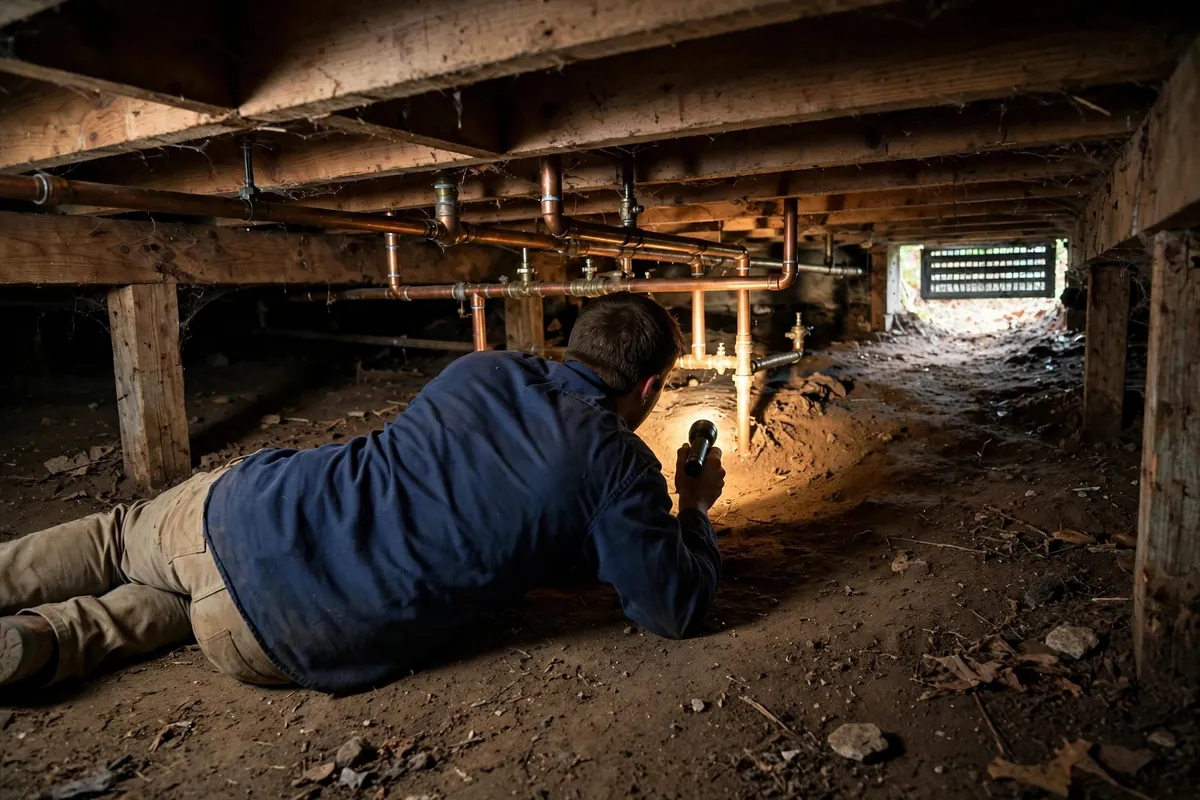
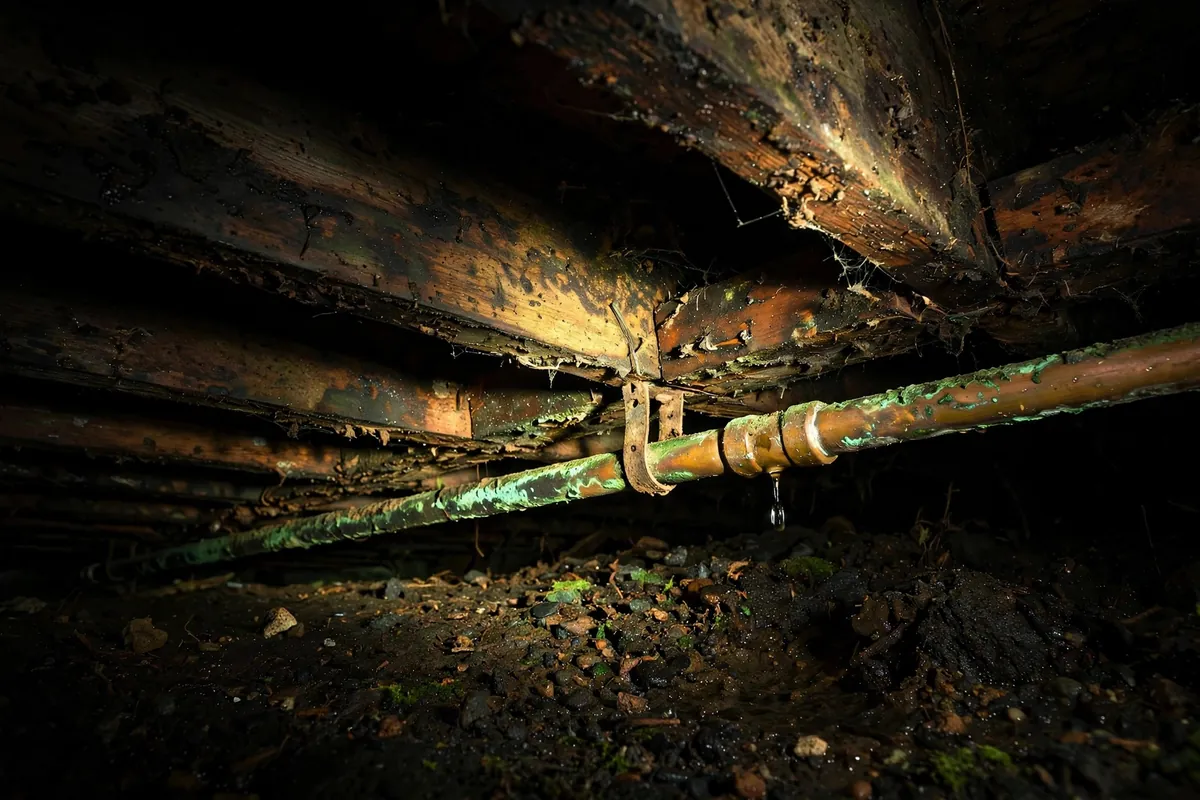
On a slab home, detection means listening through concrete. Under a raised foundation, our specialist can get eyes on the pipes themselves — which joints are sweating, which section of copper has the green corrosion bloom, which drain fitting drips when the tub empties. It is a more direct kind of diagnosis, and it is the one most leak companies skip because their whole toolkit is built for slabs.
Not sure what your home sits on? Homes in neighborhoods like Farm Hill — mostly 1950s ranch and split-level builds — are raised-foundation almost as a rule.
How We Find a Leak in the Crawl Space
We work from the meter inward, so by the time anyone goes under the house we already know which branch is losing water. The visit follows the same disciplined sequence every time:
Confirm at the Meter
With every fixture off, we check the meter's low-flow indicator and take a pressure reading to prove there is a leak and estimate how fast water is escaping.
Isolate the Branch
Shutting down branches one at a time — hot, cold, or a single bathroom group — narrows the search before anyone crawls anywhere.
Underfloor Inspection
Through the access hatch, our specialist inspects the runs directly: sweating joints, corroded sections, active drips, and drain fittings tested while fixtures run above.
Moisture Mapping
Moisture readings in the soil and on the joists show how far the water has spread — and whether the wet patch sits under the true source or has traveled.
Acoustic Confirmation
Listening equipment confirms a pressurized leak's exact position along the line, so the repair opens one section, not a trench of guesses.
Mark & Report
The leak location is marked and photographed, and you get a written summary of what failed and why — the document you want if an insurer gets involved.
What Crawl Space Leak Detection Costs
It costs the same disciplined inspection as any detection visit — the crawl space changes where we look, not how we price. These are the typical ranges for this area, confirmed with you before work starts:
| Service | Typical Range |
|---|---|
| Basic leak inspection | $100 – $300 |
| Electronic (acoustic) leak detection | $300 – $800 |
| Leak detection visit, most homes | $150 – $600 |
Detection is always quoted separately from the repair. Once the leak is pinpointed, you get the repair options in ranges as well — a section repair, a reroute, or repiping when the line has failed in more than one place. The ranges above match what we publish across our leak detection services in Redwood City — no different number because your leak happens to be under the house.
Why Underfloor Leaks Cannot Wait
A supply line dripping under a house runs around the clock, soaking the soil and the framing above it. Left alone, that moisture works into floor joists and subfloor — the soft spot you feel is often the wood, not the water — and it keeps the crawl space damp enough to invite mold growth on the underside of the home.
There is a local angle worth knowing, too: many pre-1980 crawl-space homes on the Peninsula were never bolted to their foundations. After any noticeable quake — we sit between the San Andreas and Hayward faults — a quick underfloor check for shifted or stressed lines is cheap insurance against a leak that starts silently.
Related Leak Services
Underfloor problems often travel in packs — an aging crawl-space line today, a slab or fixture leak tomorrow. These are the services Redwood City homeowners pair with this one most often:
Slab Leak Detection
For the slab and Eichler homes in town — leaks under concrete, pinpointed electronically before any concrete is opened.
Learn more →Repiping
When an underfloor line has failed in more than one place, replacing the run beats patching it a third time.
Learn more →Water Leak Detection
Hidden leaks in walls, ceilings and underground yard lines, traced without tearing the house apart.
Learn more →Crawl Space Leak Questions Homeowners Ask Us
How do I know if a leak is in my crawl space?
The classic signs are a musty smell that never quite leaves, floors that feel soft or spongy near a bathroom or kitchen, and a water meter that moves when nothing is running. If your home sits on a raised foundation and the bill keeps climbing with no leak visible inside, the crawl space is the first place we look.
Will you have to cut into my floors to find the leak?
Almost never. A raised-foundation home has an access hatch, and that is the whole advantage — our specialist goes under the house and inspects the pipes directly, with moisture readings and acoustic checks from below. Your floors and walls stay intact while we work.
How much does crawl space leak detection cost?
A basic leak inspection typically runs $100–$300 and electronic detection $300–$800, depending on the size of the crawl space and how many lines need testing. You get the range up front, and detection is quoted separately from any repair so you can decide with real numbers.
Can an underfloor leak really raise my bill that much?
Yes. A pressurized supply line leaking under a house runs 24 hours a day, and the water soaks straight into the soil where nobody sees it. Homeowners are routinely surprised by usage jumping by thousands of gallons in a month from a leak that never showed a single wet spot inside the home.
My home is on a concrete slab, not a raised foundation. Can you still help?
Yes — you just need a different page of the playbook. Slab homes are located electronically from above the concrete, and our slab leak detection service walks through that process. If you are not sure which foundation you have, call us and we will figure it out from the age and style of the house.
Do you repair the leak after you find it?
Yes. Once the leak is pinpointed and documented, we give you the repair options with price ranges — a section repair, a reroute, or repiping when the line has failed in more than one place — and you choose before any work starts.
What happens if a crawl space leak is left alone?
It quietly gets more expensive. Standing water under a home feeds mold on framing and subfloor, rots the wood that holds the floor up, and can soften the soil the footings rest on. Homeowners usually notice the side effects first — a musty smell that will not air out, floors that start to feel soft, or a bill that creeps up month after month. A leak found at the damp stage is a plumbing repair; a leak found at the rot stage is a plumbing repair plus carpentry.
Do I need to move out or clear rooms for a crawl space inspection?
No — the work happens underneath the house, not through your living space. We enter through the crawl space access hatch, so the only preparation is making sure that hatch is reachable and pets are secured while we are under the floor. Most homeowners go about their day while the testing runs, and nobody needs to pack a bag for a detection visit.
Think the Leak Is Under Your House? Get It Confirmed.
An underfloor leak soaks into soil and framing every hour it runs. One visit tells you exactly where it is, what is causing it, and what the repair will cost — in ranges, in writing, before you commit to anything.
Call (650) 632-9185 Request a Quote