Water Leak Detection Redwood City, CA
The bill says you used twice the water. The house says nothing — no puddle, no stain, no drip you can find. That gap between the meter and the visible is exactly where Leak Detection Pros works: our water leak detection Redwood City, CA service traces hidden leaks through walls, ceilings and underground yard lines with acoustic and thermal equipment, and marks the spot before a single hole is cut.
Where Hidden Water Leaks Actually Hide
A hidden leak is almost never in the middle of an open room — it hides where pipes run out of sight, and each hiding place leaves a different fingerprint. These are the locations we find them in Redwood City homes:
- Inside walls — supply and drain lines behind showers, tubs and kitchen walls; the first sign is often bubbling paint, a soft patch of drywall or a musty smell that cleaning never fixes
- In ceilings — an upstairs bathroom or a line crossing the attic space; look for a faint stain ring that grows after showers
- Underground, between the meter and the house — the service line is the single most common source of a huge bill with zero visible water, especially where it runs under a driveway or through saturated bayside soil
- Under floors — lines beneath slab and raised-foundation homes alike; warm spots point to hot lines, cupping hardwood points to slow cold-line leaks
- Behind and under appliances — water heater pans, dishwasher and washing-machine supply lines, refrigerator ice-maker lines with pinholes that mist for months
- In the irrigation system — a stuck valve or cracked lateral that only loses water on watering days, timed perfectly to look like normal use
In the older neighborhoods — the 1950s ranch stock of places like Farm Hill and Woodside Plaza — original galvanized and copper runs are simply reaching the age where pinholes appear. The leak is rarely a surprise to the pipe; it is only a surprise to the owner.
The Bill Is the First Symptom
For hidden leaks, the water bill usually knows before you do. A jump of 30% or more with no change in household habits — no guests, no new landscaping, no pool fill — is a leak until proven otherwise. Homeowners who act on the first strange bill almost always pay for detection once; homeowners who wait two or three cycles pay for detection plus the damage the water did in the meantime.
The Meter Test: Confirm the Leak Yourself, First
Before you pay anyone — including us — this ten-minute test tells you whether water is escaping on your side of the meter, and roughly how fast.
Shut Everything Off
Every faucet, toilet, appliance and the irrigation controller. Nobody flushes or runs a tap during the test.
Watch the Low-Flow Indicator
On your meter, the small dial or triangle is the leak indicator. If it turns while the house is off, water is moving somewhere it should not be.
Take a Two-Hour Reading
Note the meter numbers, use no water for two hours, and read it again. Any movement is lost water, measured.
Check the Pattern Hourly
Redwood City's My Water portal shows usage hour by hour. Water running at 3 a.m. points to a supply line or toilet; spikes only on watering days point outside.
One more tool worth knowing about: the City partners on discounted Flume smart water monitors, which clip onto the meter and alert your phone when flow looks wrong — one local resident's alert caught a broken irrigation line before it became a season of overage. Set the alerts either way; they are how the next leak gets caught in a day instead of a billing cycle.
What the Test Cannot Do
The meter test confirms a leak exists; it cannot say where. That is the part that takes instruments and method — isolating hot from cold, supply from irrigation, house from sewer, and then listening and imaging until the signal peaks. It is also the part that decides what the repair costs, which is why we never quote a hidden-leak repair before the pinpoint.
How We Trace a Hidden Leak to One Marked Spot
The method is elimination, then precision: narrow the leak to one branch of the system, then pinpoint it with instruments before anything is opened.
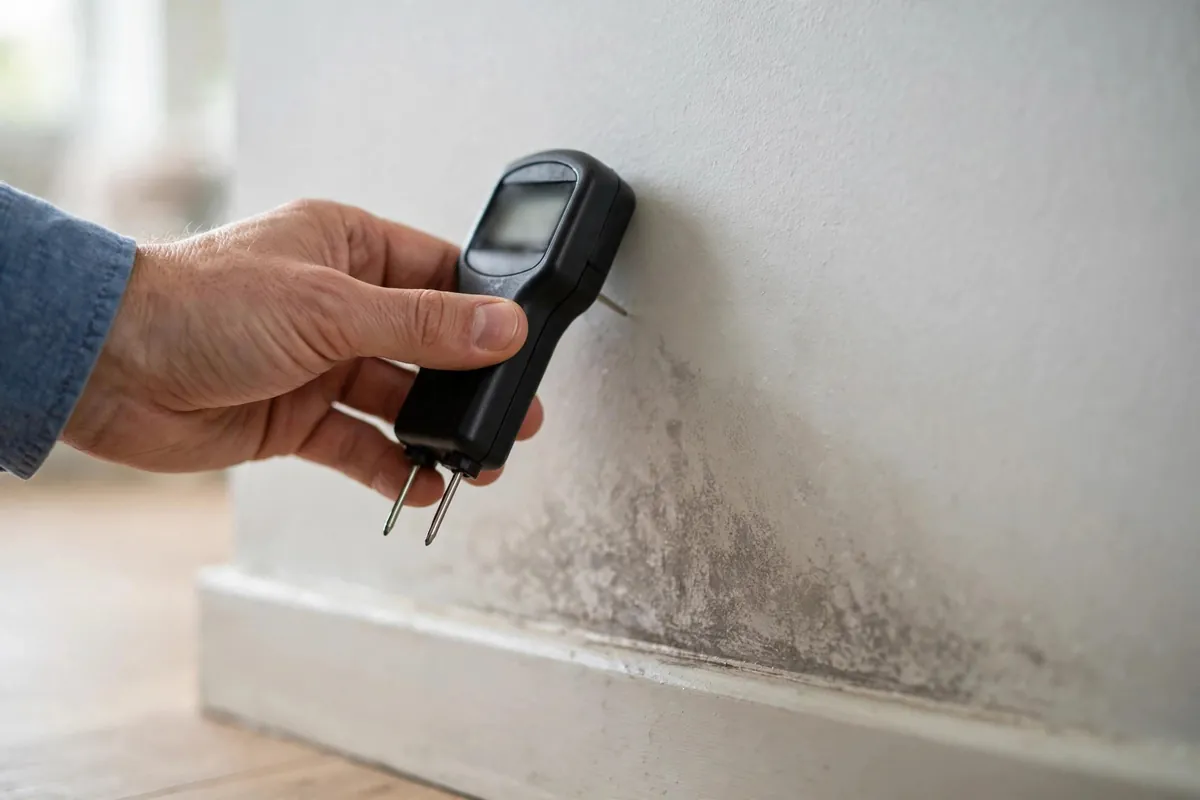
We start where your meter test left off — isolating branches. Shut the irrigation and the leak stops? The problem is outside. Close the water heater's cold inlet and the meter still moves? The cold side is the suspect. A pressure gauge on the isolated branch confirms the leak and its rate. From there, acoustic listening equipment does the heavy lifting: pressurized water escaping a pipe makes a distinct sound, and a trained ear with a ground microphone follows it to its loudest point. Thermal imaging backs it up — a hot-water leak shows as a warm plume through flooring or drywall, and moisture meters map exactly how far the damage has spread from the source, which matters both for the repair and for any insurance documentation. Under-slab lines are the specialty covered by our slab leak service, and underfloor runs in raised-foundation homes by our crawl space service — but the tracing discipline is identical: evidence first, opening second, quote in a range before any repair begins.
What Hidden-Leak Detection Costs
The price depends on where the water is hiding — a wall leak in an accessible bathroom is a shorter hunt than a service line under a driveway. These are the typical ranges for this area, and they are the same ranges published on our home page:
| Service | Typical Range |
|---|---|
| Basic leak inspection | $100 – $300 |
| Electronic (acoustic) leak detection | $300 – $800 |
| Underground leak locating | $500 – $1,200 |
Detection is always priced separately from repair. That separation is deliberate: it means the person finding your leak has no financial reason to find a bigger problem than the one you have, and you decide about the fix with a marked location, a written report and real numbers in hand.
Related Services
Slab Leak Detection
Leaks under the concrete, pinpointed electronically before the slab is opened.
Learn more →Crawl Space Leak Detection
Underfloor leaks in the raised-foundation homes common across older Redwood City.
Learn more →Sewer Leak Detection
When the problem is on the drain side — camera inspection shows you the line from inside.
Learn more →Hidden Leak Questions Homeowners Ask
My water bill spiked but I cannot see a leak anywhere. Where is the water going?
Usually into the ground or inside a wall, where it never makes a puddle. The most common culprits are the underground service line between the meter and the house, a toilet that runs silently, an irrigation line, and a pinhole leak in a wall or under a floor. A meter test tells you within minutes whether water is escaping on your side of the meter; from there, branch-by-branch isolation finds which system is losing it.
Can the water meter itself be wrong?
It is the first thing homeowners suspect, and occasionally readings do creep from pressure fluctuations — but a meter that over-registers is rare compared with a real leak the owner has not found yet. The honest way to settle it is the shut-off test: close the house valve and watch the meter. If it still moves with the house isolated, that is a conversation to have with the City, with your test documented. If it stops, the water is going somewhere inside your plumbing, and we find where.
Can you find a leak inside a wall without tearing the wall apart?
Yes. Moisture meters map how far the damp has spread, thermal imaging shows the temperature signature of water moving behind the surface, and acoustic equipment listens at the wall until the signal peaks at the break. When the wall does need opening, it is one targeted section at the marked spot — not exploratory holes up and down the hallway.
How much does it cost to find a hidden water leak?
A basic leak inspection typically runs $100–$300, electronic acoustic detection $300–$800, and locating an underground line $500–$1,200, depending on the home and how hidden the leak is. You hear the range that applies to your situation before the work starts, and detection is priced separately from whatever repair you decide on.
How long does a detection visit take?
Most homes take one to three hours, depending on size and how many branches need isolating. Underground and hard-to-access leaks can take longer. Either way, you finish the visit with a marked location and a written summary of what was found, what it is doing, and what the repair options cost.
Do I get anything in writing for my insurance company?
Yes. Every detection visit ends with a written report covering the source of the leak, the test readings and any resulting damage we documented. Insurers decide claims on documentation — where the water came from and whether the damage was sudden or gradual — and a dated, specific report is far stronger than a verbal description after the fact.
How can I check for a leak myself before calling anyone?
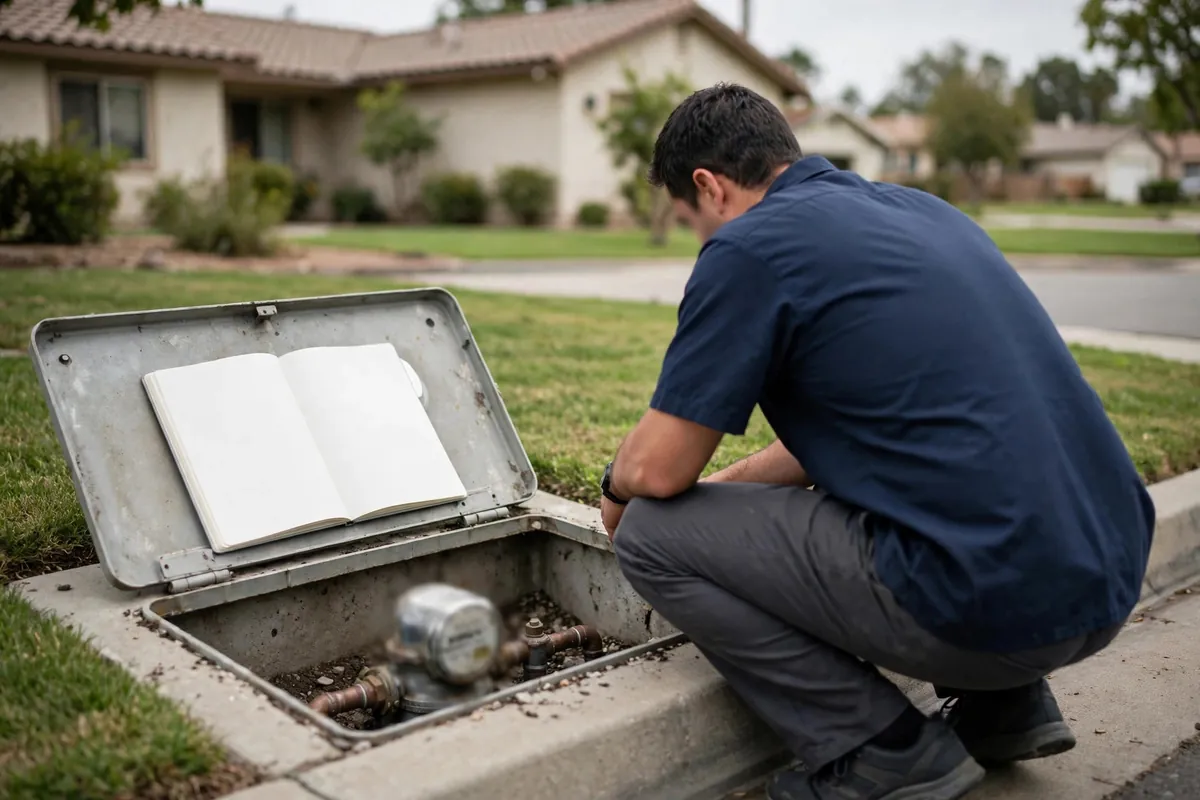
Yes — the meter test takes about fifteen minutes and needs no tools. Turn off every fixture and appliance that uses water, then find your meter (usually in a sidewalk box near the street) and check its low-flow indicator, the small dial or triangle that moves with even a trickle. If it is still moving with everything off, water is escaping somewhere. Next, close the main house valve and watch again: if the indicator stops, the leak is on the house side; if it keeps moving, it is in the line between the meter and the house. That one test narrows the search before anyone charges you for a visit.
Can I get my high water bill adjusted once the leak is fixed?
Not automatically — the City has no published leak-adjustment policy we can point you to, so be skeptical of anyone who promises one. What actually helps is documentation: fix the leak, keep the repair invoice and any detection report, and check your hourly usage in the City's My Water portal so you can show exactly when the spike started and stopped. Then call the City's utility billing office and ask what review is available for your account. A clear paper trail gives that conversation something solid to work with.
The Meter Is Telling You Something. Find Out What.
A hidden leak does not heal, and every billing cycle it runs adds water damage you cannot see to a bill you can. One visit marks the spot and prices the fix — in ranges, in writing.
Call (650) 632-9185 Request a Quote