Faucet Leak Repair Redwood City, CA
A drip you can hear at night is easy to postpone — until the water bill arrives, or the cabinet under the sink turns soft. Leak Detection Pros provides the faucet leak repair Redwood City, CA homeowners call for when a fixture stops being a nuisance and starts being a leak: the drip fixed at the part that actually failed, and everything connected to it checked while we are there.
Small Drip, Serious Money
A leaking faucet wastes water around the clock — a steady drip never sleeps, never takes a day off, and quietly adds hundreds of gallons to your usage between one bill and the next. Worse, the drip you can see is often the smallest leak at that fixture.
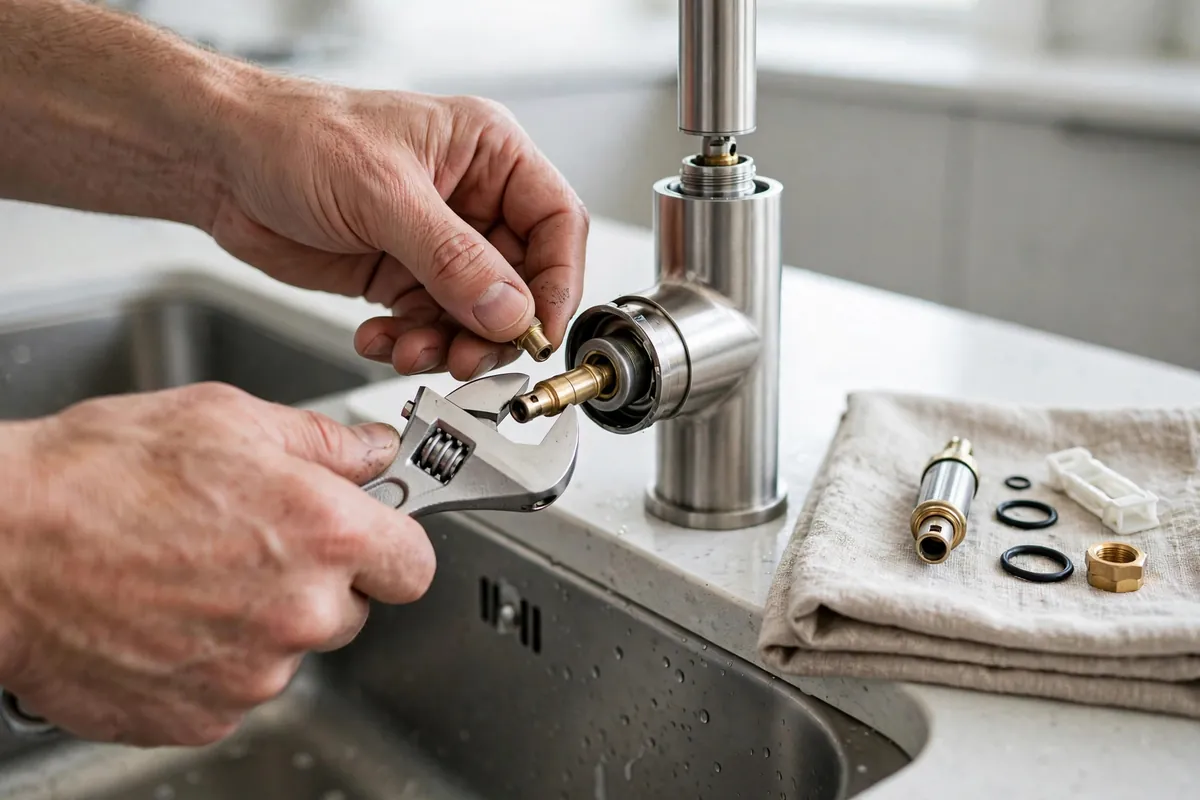
Think about what a faucet actually is: a valve, a cartridge or stem, seals, and a pair of connections to the home's pressurized supply lines, all sitting above a cabinet or inside a wall. Any of those points can leak, and the failure points behave very differently. A worn cartridge drips at the spout. A failing O-ring weeps around the handle base every time the water runs. An angle stop valve under the sink — the small shutoff most homeowners never touch — can seep for months into the cabinet floor, where the damage stays hidden until the board gives way under a stored bottle.
These are the leak points we check on every fixture call:
- Cartridges and stems — the moving seal inside the faucet, and the most common cause of a spout drip
- Valve seats — a corroded or scored seat shreds new washers and brings the drip right back
- O-rings and handle seals — leaks that only appear while the faucet is running
- Angle stop valves — the under-sink shutoffs that seize up with age and weep at the stem
- Flexible supply lines — the braided hoses between the valve and the faucet; when these let go, they let go all at once
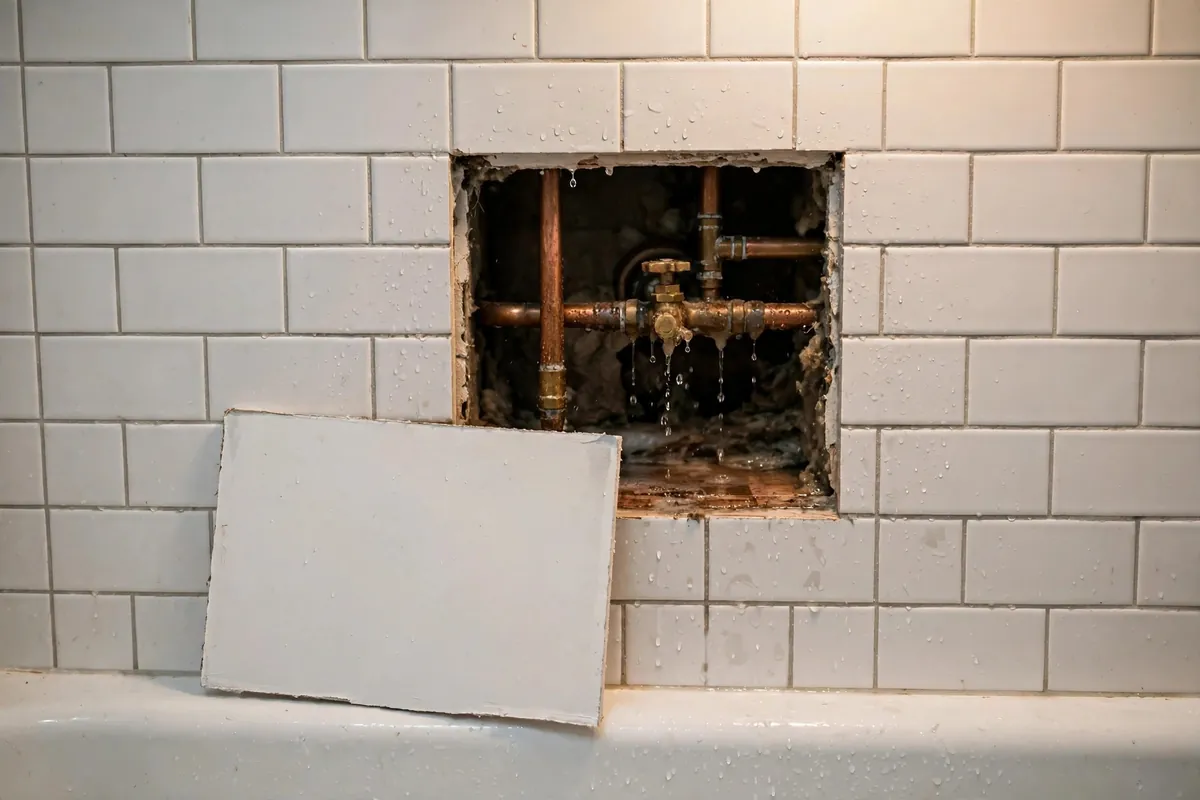
- Shower and tub valves — the same failures behind a wall, announced by a shower head that never stops dripping
- Hose bibbs — outdoor spigots that drip outside and, on a split pipe, leak inside the wall
Why the Drip Comes Back
The most common story we hear: a homeowner changed the washer, the drip stopped for a few weeks, then returned. That is a valve seat problem — the metal surface the washer seals against is pitted, so it chews through every new washer. Dressing or replacing the seat ends the cycle. It is also why we diagnose the fixture before ordering parts: the same drip can come from three different failures, and only one repair fixes each.
How We Fix It — and When We Say Replace It
We repair the part that failed, with the correct parts for that fixture, and we test the whole connection group under pressure before we leave. The sequence:
Identify the Fixture
Compression, cartridge, ball or ceramic-disc — the faucet's type decides which parts can leak and which repair applies.
Isolate & Open
The angle stops are closed (and tested — a seized stop gets flagged, not forced) and the fixture is opened without marring the finish.
Inspect the Sealing Parts
Cartridge, stem, seat and O-rings are checked for wear, scoring and corrosion — including the seat most DIY repairs miss.
Repair With Correct Parts
The failed component is replaced with the manufacturer's part for that model, not a universal part that almost fits.
Check the Connections
Angle stops, supply lines and the drain trap below get inspected while the cabinet is open — the hidden leaks are the expensive ones.
Pressure Test
Water back on, fixture cycled, every joint checked dry. A repair that is not tested under pressure is a guess.
And the honest other half: sometimes replacement is the smarter money. If the faucet body itself is corroded, the finish is failing into the water path, or the model is so old that parts no longer exist, we will say so and price a replacement instead of selling you a repair with a short life. That judgment call — repair versus replace — is part of what our leak detection work across Redwood City is built on: fix what is fixable, flag what is not.
What Faucet Leak Repair Costs
Diagnosis comes first and is priced plainly: a basic leak inspection typically runs $100–$300. Most faucet repairs then come down to one failed part — a cartridge, a seat, a stem seal — plus the labor to fit it, and you get that figure as a range before any work starts.
What changes the price is what we find around the faucet. A straightforward cartridge swap is a small job. A shower valve that needs wall access, or angle stops so corroded they must be replaced before the fixture can even be isolated, is a bigger one — and we would rather show you that under the sink, with the cabinet open, than surprise you on the invoice. If the fixture group turns out to be one symptom of a bigger pattern — old galvanized lines feeding the whole bathroom, for instance — we will tell you that too, and what it means, without turning a faucet call into a sales pitch.
The Leak Behind the Faucet Matters More
Here is the trade reality: spout drips waste water, but supply-line and angle-stop leaks destroy property. A braided supply hose that bursts while you are at work releases full line pressure into the room until someone shuts it off. That is why every fixture visit includes the connections below — and why a toilet that runs on its own deserves the same visit. Our toilet leak repair service covers the silent tank leaks that waste even more water than a dripping faucet, and our water heater leak repair handles the valves and fittings at the tank.
Related Services
Fixture leaks rarely travel alone — these are the calls that pair with this one:
Toilet Leak Repair
A silent toilet leak can waste hundreds of gallons a day — more than any dripping faucet. We test, find it and fix it in one visit.
Learn more →Water Heater Leak Repair
Puddles at the tank, rust at the fittings or a relief valve that will not stop dripping — found and fixed.
Learn more →Water Leak Detection
When the meter moves but no fixture is dripping, the leak is hidden — in a wall, a ceiling or a yard line.
Learn more →Faucet & Fixture Questions Homeowners Ask Us
Why is my faucet still dripping after I changed the washer?
Because on most modern faucets the washer is not the seal that fails — the cartridge or the valve seat is. A scored seat will shred a new washer in weeks, and a worn cartridge drips no matter what you swap at the spout. We identify the faucet type first, then repair the part that is actually leaking.
Is a dripping faucet really worth a service call?
A single drip does not sound like much, but it runs all day and all night, and it rarely stays a single drip — seats and cartridges wear progressively. Just as important, the fixture visit is when we catch the bigger risks hiding with it: weeping angle stops and aging supply lines under the sink, which are the leaks that flood cabinets and floors.
Do you repair shower and tub valves too?
Yes. Shower and tub valves are faucets behind a wall — the same cartridge and seat failures cause the dripping shower head and the tub spout that never fully stops. Where the valve body itself has failed, we can usually reach it through an access panel or from the back side of the wall rather than tearing out tile.
What if the leak is under the sink, not at the faucet?
That is common, and it is the more damaging version — angle stop valves, supply lines and drain traps all live in that cabinet, and a slow drip there soaks the cabinet floor and the wall behind it for months. We pressure-test and inspect the whole fixture group, not just the spout, so the repair covers the leak you cannot see.
Can you get parts for my faucet?
In most cases, yes. We carry cartridges, seats, O-rings and stems for the major manufacturers on the truck, and older Redwood City homes often have fixtures worth repairing rather than replacing. If a faucet is genuinely at the end of its life — corroded body, discontinued parts — we will tell you plainly and price the replacement instead.
How much does faucet leak repair cost?
A basic leak inspection typically runs $100–$300, which covers diagnosing the fixture and the connections around it. Most faucet repairs come down to a cartridge, seat or valve part plus the labor to fit it, and you get that price as a range before we start — never a surprise total at the end.
Can a slow faucet leak damage cabinets or counters?
Yes — the drip you can see is rarely the expensive part. Water that works under a fixture or into the cabinet below keeps particleboard and cabinet floors damp, and they swell, soften and grow mold long before the damage shows on the surface. By the time a cabinet floor feels spongy, the leak has usually been running for months. Fixing the drip early is cheap protection for the cabinetry around it.
When is replacing the faucet smarter than repairing it?
When the body of the faucet is the problem. A worn cartridge, washer or seat is a normal repair, but if the valve seat is pitted, the finish is corroded through, or parts for an older model are no longer made, each repair buys less time than the last. We will tell you which side of that line your faucet is on before you spend anything — sometimes the right call is a new fixture, and it is better heard from us than learned after a second drip.
That Drip Is Not Going to Fix Itself
Seats and cartridges only wear one direction. Get the fixture diagnosed properly — the drip stopped at the part that failed, and the connections behind it checked in the same visit.
Call (650) 632-9185 Request a Quote