Sewer Leak Detection Redwood City, CA
Sewer lines fail quietly for years — then all at once. Leak Detection Pros provides the camera-first sewer leak detection Redwood City, CA homeowners use to see the inside of their own line: roots, offsets, bellies and breaks shown on screen and marked from above ground, so any repair decision starts with footage, not faith.
Signs Your Sewer Line Is Leaking or Failing
A failing lateral rarely announces itself with one dramatic event — it sends a pattern of small complaints that all trace back to the same buried pipe. Watch for:
- Several drains slowing down together — not one sink, but the whole house draining reluctantly
- Gurgling toilets or tubs when another fixture runs or a load of laundry drains
- Sewer odors near floor drains, in the yard, or around the cleanout that no cleaning removes
- Backups into the lowest tub, shower or floor drain — the classic main-line warning
- A soggy, sunken or suspiciously lush patch of yard along the line's path to the street
- Recurring clogs that a cable clears for a few weeks, then return in the same place
- Foundation or paving cracks near the line's route, as escaping water moves soil
In the older parts of the city — the original homes around Downtown and the postwar tracts — drain lines are cast iron and clay-era pipe that have been in the ground for 60 years or more. Corrosion, joint movement from our seasonal clay soils, and decades of root pressure are simply what time does to those materials. The question is never really whether an old lateral has issues; it is where they are and how far they have gone, and that is a question only a camera answers.
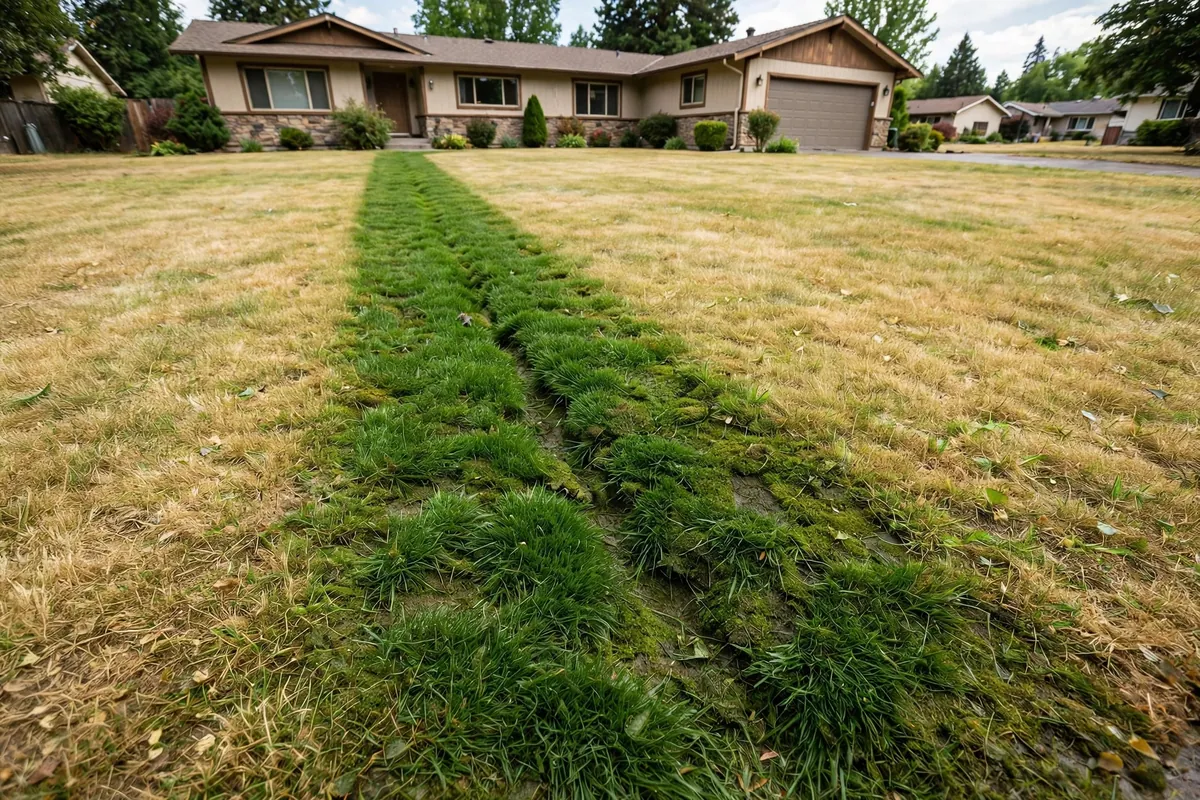
Leak vs. Break vs. Blockage
A blockage is something in the pipe. A break is the pipe itself. A leak is the pipe letting water — and soil — trade places at a joint or crack. All three feel similar from the kitchen sink, and each has a completely different fix and price. The camera is how you find out which one you own before paying for any of them.
Camera First: See the Problem Yourself
You watch the inside of your own sewer line on screen, with the problem located and marked from above ground — that is the whole design of this service, and it exists because of how often homeowners get burned without it.
Read any homeowner forum on sewer work and the same story repeats: a company quotes thousands of dollars for excavation it cannot show the owner, diagnoses that change between visits, and pressure to sign before a second opinion. The community's advice has become a slogan for a reason — ask for the video. Our rule follows it exactly: if we cannot show you the problem on the screen, we do not quote the repair. It is the same evidence-first principle behind our leak detection process on the water side, applied underground.
Access the Line
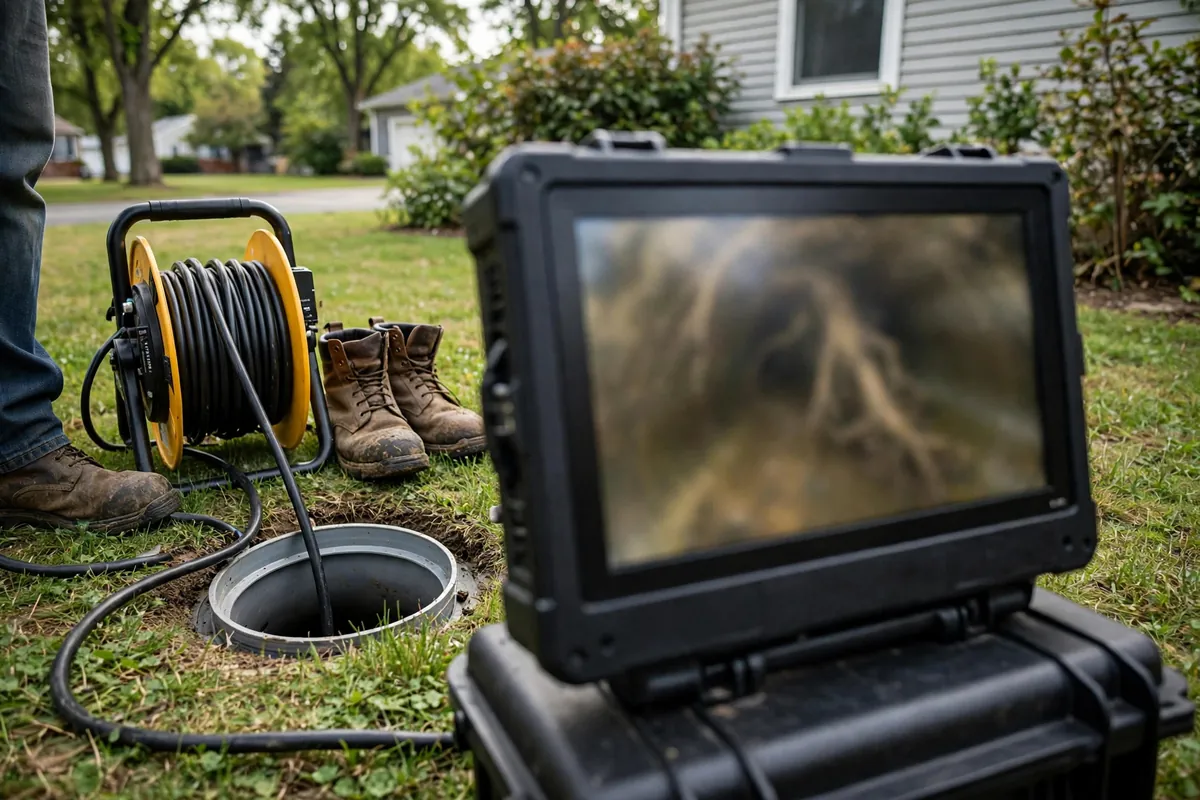
The camera enters through the cleanout or an access point — no digging, no demolition.
Run and Narrate
We run the full length to the street connection and call out what the camera sees as it travels.
Locate and Mark
A signal from the camera head is picked up above ground; the problem spot and its depth get marked on the surface.
Report and Options
You get the findings in writing with repair options and ranges — targeted repair, lining where suitable, or monitoring when the line is sound.
What the Camera Usually Finds in Redwood City Lines
Five findings account for nearly every problem we document here — and knowing which one you have is what separates a maintenance bill from a replacement:
Root Intrusion
The most common finding. Roots slip into joints chasing moisture, grow into a catching net, and eventually crack the pipe wall itself. Caught early, roots are a cutting-and-treatment job; caught late, they are a pipe replacement.
Offset Joints
Sections that have shifted out of alignment as soil moves — clay that swells and shrinks with the seasons, and ground that settles. Every offset is both a snag point for debris and an open door for roots and leaking.
Bellied (Sagging) Line
A low section where the pipe has sunk and water permanently pools. Solids settle in the belly instead of flowing through, which is why some homes clog on a schedule no matter how carefully they treat their drains.
Corrosion and Scale
Cast iron roughens and thins from the inside over decades until the bottom of the pipe effectively disappears. The camera shows the rough, flaking surface long before the first collapse — if anyone looks.
Cracks and Breaks
Fractures from soil pressure, tree roots and age. A cracked section leaks sewage out and groundwater in, undermines the soil around it, and is the finding that most often turns a cleaning call into a repair conversation.
Grease and Buildup
Sometimes the pipe is fine and the problem is what decades of kitchen use left on its walls. That is the good-news finding — it belongs to our drain cleaning crew, not a repair quote.
What a Sewer Camera Inspection Costs
A camera inspection typically runs $271–$1,725 nationally, based on thousands of verified projects — most straightforward residential lines land in the lower half of that range, with price driven by the length of the run and how the line is accessed. You hear the range for your line before we start.
Put that next to the alternative: an excavation quoted blind can run into five figures, and forum after forum shows homeowners paying it for lines that turned out to need a cleaning or a two-foot repair. The inspection is the cheapest certainty in the whole sewer business. If the footage shows a line that is sound, you have bought proof and peace of mind. If it shows a failure, you have the exact spot, the depth and the evidence to get honest competing quotes — including ours, which will be a range in writing, with detection and repair priced separately. And when sewage is actively backing up into the house, skip the scheduling conversation and treat it as what it is: our emergency team handles those calls around the clock.
Related Services
Drain Cleaning
When the camera says the pipe is sound and the clog is the problem — cleared properly.
Learn more →Water Leak Detection
For leaks on the pressurized side — walls, ceilings and underground supply lines.
Learn more →Sewer Line Questions Homeowners Ask
How do I know the problem is the sewer line and not just a clog?
A single slow sink is usually a local clog. The sewer line itself is the suspect when several drains slow down together, toilets gurgle when other fixtures run, sewage backs up into the lowest tub or floor drain, or a patch of yard over the line stays soggy and unusually green. Those are whole-system symptoms — and a camera run settles the question definitively, because you see the inside of the pipe instead of guessing from the symptoms.
Do I get to see the video of my sewer line?
Yes — that is the point of the service. You watch the camera feed as it travels the line, we narrate what is on screen, and the problem spot is located electronically from above ground and marked with its depth. Homeowner forums are full of five-figure sewer quotes for work nobody could show the owner. Our rule is simple: if we cannot show it to you on the screen, we do not quote it.
How much does a sewer camera inspection cost?
Camera inspections typically run $271–$1,725 nationally, based on thousands of verified projects, with most straightforward residential lines falling in the lower half of that range depending on length and access. You hear the range that applies to your line before we start. It is a fraction of what an unnecessary excavation costs — and it is what keeps a repair quote honest.
Will you have to dig up my yard to fix it?
Not to find the problem — the camera and locator mark the spot and depth without a shovel. If a repair is needed, knowing the exact location means any digging is targeted to that spot instead of a trench across the yard, and some failures can be addressed with trenchless methods such as pipe lining where the line's condition allows. You will know which situation you are in, with the footage to prove it, before deciding.
Can roots really break into a sewer line?
Yes — it is the most common thing our cameras find in older Redwood City neighborhoods. Roots enter through tiny gaps at pipe joints, drawn by the moisture and nutrients inside, then grow into a net that catches everything flowing past. Early root intrusion can be cut and treated; left alone, the roots deform and eventually crack the pipe, which turns a maintenance job into a replacement.
Does a camera inspection damage the pipe?
No. The camera head is a small waterproof unit on a flexible push rod, designed to travel residential lines without cutting, scraping or chemicals. It goes in through an existing cleanout or access point whenever one is available, and it comes out the same way — the pipe is exactly as it was, except now you know what is inside it.
What are the signs of an underground sewer leak?
The yard usually tells the story first: a patch of grass that is greener or soggier than everything around it, a sewage smell outdoors that comes and goes, or ground that stays soft in dry weather. Inside, the hints are drains that gurgle, backups that keep returning after clearing, and more than one fixture slowing at the same time. On the bayside flats, saturated soil can let an underground leak run a long time without surfacing, so a camera inspection is often the first real look anyone gets at the line.
Does homeowners insurance cover a sewer line leak?
Sometimes — the pattern in most home policies is that sudden, accidental damage the leak causes is treated differently from the pipe itself. Repairing or replacing the failed pipe is usually on the homeowner, and slow leaks blamed on age or deterioration are the most common reason for a denial. What tends to be covered is the resulting damage and, in many policies, the cost of accessing the line to repair it. A camera video and a written report give your insurer something concrete to work with, which is why we document both.
See Your Sewer Line Before Anyone Quotes a Shovel.
One camera run replaces every guess about what is happening under your yard — with footage, a marked spot and honest ranges for whatever it actually needs.
Call (650) 632-9185 Request a Quote