Leak Detection Woodside Plaza
Most leak detection Woodside Plaza calls come from the owners of the neighborhood's 1950s ranch homes — houses whose original supply pipes have now been faithfully serving for around seventy years. The good news about these midcentury homes is that most sit on raised foundations, so leaks can usually be found and reached from the crawl space instead of through your floors. Leak Detection Pros pinpoints them with pressure testing, acoustic gear and thermal imaging, then gives you the repair options in ranges before any work begins.
Ranch Homes, Original-Era Plumbing
Woodside Plaza is classic midcentury Redwood City — original and updated ranch-style and split-level homes from the 1950s, built over crawl spaces on perimeter foundations.
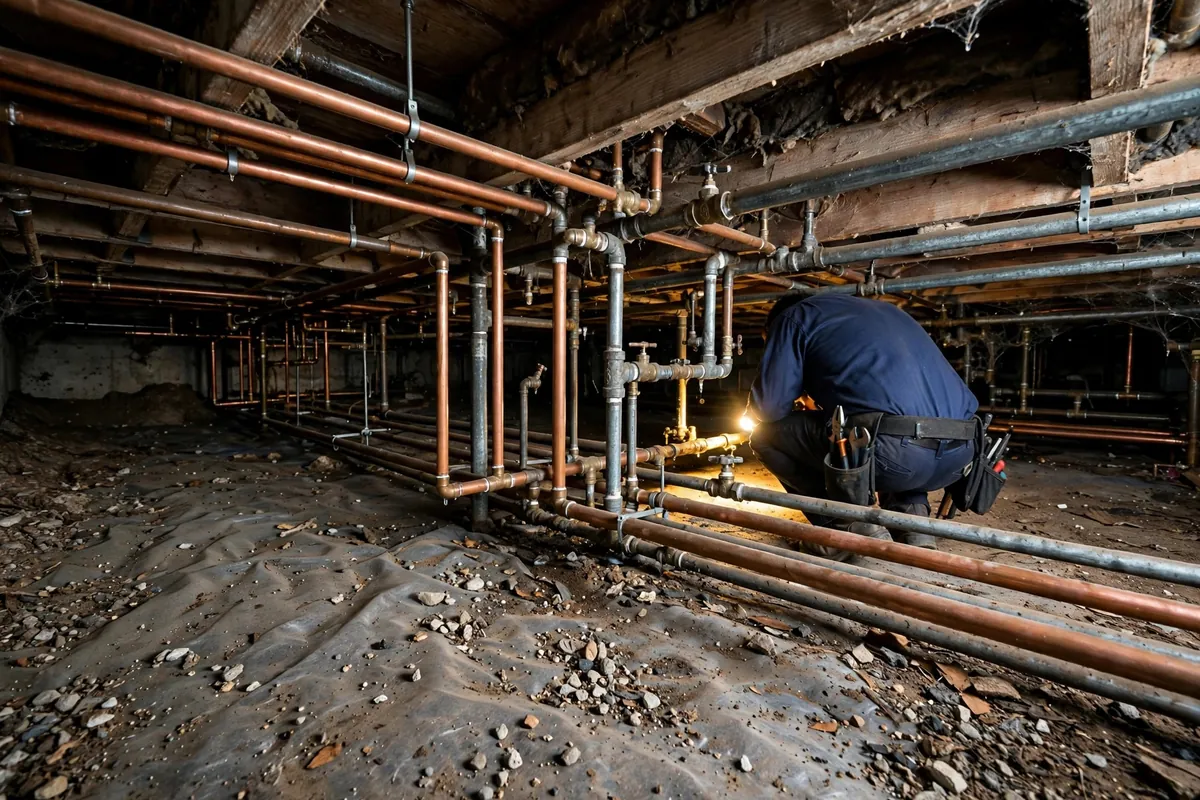
That building pattern decides how leaks behave here. The supply and drain lines run beneath the floor, in the crawl space, rather than buried in concrete. A leak down there does not announce itself with a puddle in the kitchen; it drips quietly onto the soil, keeps the underside of the house damp, and shows up weeks later as a musty smell, a soft spot in the floor, or a water bill that has crept up for no obvious reason. By the time most homeowners call, the leak has usually been running a while.
The pipes themselves are the other half of the story. Homes of this era on the Peninsula were typically plumbed with galvanized steel supply lines, a material with a working life of roughly forty to fifty years — which means original Woodside Plaza lines are well past theirs. Some homes have been partially repiped over the years, which creates its own pattern: the new section is fine, and the leak opens where old meets new. Detection here is about mapping what is actually under your floor — which branches are original, which were replaced, and which one is losing water right now — before anyone recommends a repair or a repipe.
The Crawl Space Is Your Friend
Slab homeowners envy this: in a raised-foundation ranch home, we can usually isolate, test and visually confirm a leak from below. Floors stay down, tile stays intact, and the repair conversation starts with a marked pipe instead of a demolition plan.
Leak Problems We See Most in Woodside Plaza
Age plus access: the leaks here are era leaks, hiding in the crawl space or at the seams between old and new plumbing.
- Pinhole leaks in galvanized lines — internal rust narrowing the pipe until the wall gives way at a thread or elbow
- Failures where repipe meets original — partial updates that leave the oldest section carrying full pressure
- Underfloor drain leaks — slow drips soaking soil and subfloor, feeding mold before any indoor symptom
- Water heater and laundry line leaks — aging valves and supply hoses in garage and utility corners
- Yard service line leaks — the meter-to-house run, visible only as meter creep and a rising bill
- Low pressure throughout the house — less a leak than a warning: scaled galvanized pipe nearing the end
One practical note for this neighborhood: because so many homes share the same era and the same materials, a leak at your place is information about the whole system. We test the branches, not just the drip, so the report tells you what shape the rest of the plumbing is in.
One corner of the house deserves special suspicion in these ranch homes: wherever the water heater and the laundry sit. Those two appliances concentrate more valves, flex lines, drains and supply hoses in a few square feet than the rest of the house combined, and in a 1950s home much of that hardware is simply old. A relief valve that weeps a cup a day, a washing-machine hose sweating at its crimp, a heater drain valve that no longer seats — none of them announce themselves, and together they can account for a meter that never quite rests. Our branch testing covers that corner deliberately, not as an afterthought.
It also explains why the written report matters more here than the single fix. In a house plumbed in one era, every test result is a sample of the whole system. A branch that holds pressure is genuinely good news. A branch that loses it slowly tells you about its neighbors, too — same pipe, same age, same water. Homeowners planning to stay in these homes use that report to sequence the work: fix what is failing now, budget for what the tests say is next.
Services We Run in Woodside Plaza
The services this neighborhood's housing stock asks for — all of them start from the same process described on our Redwood City leak detection homepage.
Crawl Space Leak Detection
Underfloor leaks in raised-foundation ranch homes, pinpointed from below before they damage the subfloor.
Learn more →Repiping
When original galvanized lines fail in more than one place, replacing them beats patching — PEX and copper options, priced in ranges.
Learn more →Water Leak Detection
Wall, ceiling and yard-line leaks traced with acoustic and thermal equipment across the whole property.
Learn more →Woodside Plaza ZIP Code: 94061
Woodside Plaza addresses sit in ZIP code 94061, along the Woodside Road corridor — one of five ZIP codes our crew covers across the city.
Nearby areas with the same midcentury bones:
Inside a Woodside Plaza Crawl Space: What We Actually Find
Homeowners never see the underside of their own house. Here is what a detection visit looks like from down there.
It starts with the hatch — usually in a closet floor or at the side of the house — and a slow first pass with a light. Crawl spaces record their own history. Damp soil in one bay and dry soil in the next tells you where to look before any instrument agrees. A green or white crust blooming on a joint means that joint has been weeping, drying and weeping again, possibly for years. Insulation sagging in one spot, subfloor darkened in another — the underside of a ranch home is a map, and leaks sign their work.
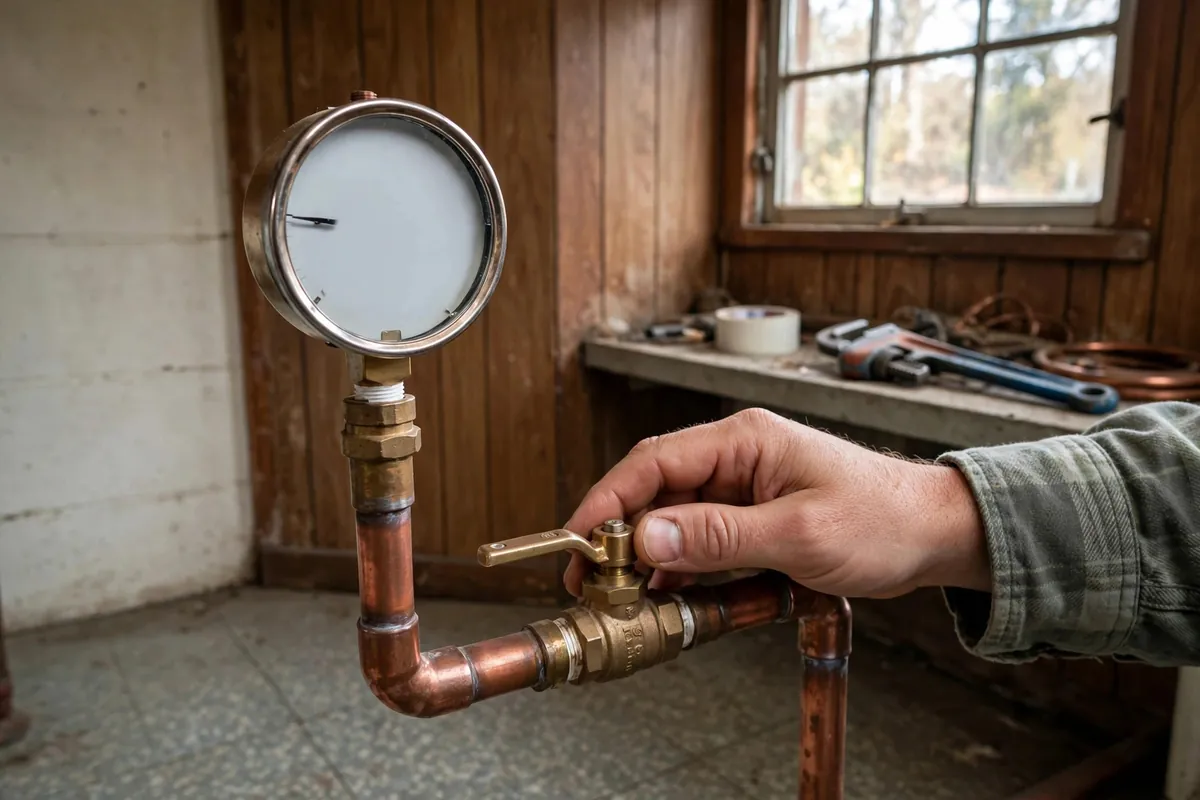
Then the gauges go on. Branches are isolated at their shut-offs and pressure tested one at a time, which converts the crawl-space map into proof: this run holds, this run fades. The fading branch gets followed hand over hand — past the bathroom group, along the kitchen wall, out to the water-heater corner — with the acoustic sensor confirming what the gauge suspects. In most Woodside Plaza homes the whole underside can be read this way in a single visit, because the era's builders ran the plumbing where a person can reach it.
What surprises homeowners is how specific the findings get. Not the plumbing is old, but this elbow, this tee, this six feet of threaded galvanized between two remodels. Equally useful is what tests sound: original pipe that still holds full pressure gets left alone, whatever its birthday says. Seventies-era pipe is a suspicion, not a verdict, and the visit exists to replace suspicion with readings.
You come out of it with a branch-by-branch picture: what is leaking, what is tired, what is fine, and what each of those means in repair ranges. For a neighborhood where nearly every house shares the same plumbing generation, that picture is the difference between patching forever and fixing things in the right order, once.
Woodside Plaza Leak Questions
Are original 1950s pipes really a problem now?
In most cases, yes — it is a matter of arithmetic. Galvanized supply pipe of that era was expected to last roughly 40 to 50 years, and the ranch homes here were built in the 1950s. That puts original lines well past their design life. It does not mean every pipe fails at once, but it does mean leaks stop being bad luck and start being a pattern worth addressing.
What are the signs of a leak under a raised-foundation home?
Musty smells that never quite clear, floors that feel soft or uneven in one spot, cupping hardwood, and a water bill creeping up are the common ones. Because the leak drips into the crawl space instead of pooling indoors, the meter test matters: if the low-flow indicator moves with everything off, something underneath is leaking.
When does a repipe make more sense than another repair?
When the failures stop being isolated. One leak in sound pipe is a repair. A second or third leak in different places, rusty water, and pressure dropping across the house point to a system at end of life — at that point repeated spot repairs usually cost more over five to ten years than replacing the lines. We lay out both sets of ranges so you can do the math with real numbers.
Can you find the leak without pulling up my floors?
Yes. In a raised-foundation home, many lines run in the crawl space and can be inspected and pressure tested from below. We isolate the branch, test it, then confirm with acoustic equipment and thermal imaging. Most Woodside Plaza leaks are pinpointed without opening a single floorboard.
What does a detection visit cost here?
A basic leak inspection typically runs $100–$300, electronic acoustic detection $300–$800, and slab or underground locating $500–$1,200. Crawl-space work usually falls in the first two bands. You get the range before work starts, and detection is priced separately from the repair, so a repair decision is never bundled into the finding.
What would repiping a ranch home like mine actually cost?
A full repipe typically runs $1,500–$15,000 depending on the size of the home and the material chosen. For a home of roughly 2,000 square feet, PEX usually lands around $2,000–$4,000, while copper runs about $8,000–$16,000. A one-story ranch with a crawl space sits at the friendlier end of any range because every line is reachable from below. We price your home specifically, in ranges, from the test results — not from a national table.
My water runs rusty for a few seconds, then clears. Is that a leak?
No — that is corrosion, not a leak. Galvanized pipe rusts from the inside, and when water sits in it overnight or while you are away, the first draw pulls that rust color with it. It is one of the clearest warning signs that the pipe is nearing the end of its life, but it does not lose water on its own. The meter test separates the two: if the low-flow indicator sits still with everything off, you have an aging-pipe question, not an escaping-water one.
Will insurance pay to replace my old pipes?
Generally, no. Insurance responds to sudden events — a burst line and the damage it causes — not to pipes wearing out over decades, so the repipe itself is treated as maintenance. The water damage from a sudden failure is often another story, and tear-out to reach the failed line is commonly covered with it. Our report documents condition and failure separately, which is the distinction an adjuster draws as well.
Seventy-Year-Old Pipes Deserve a Look, Not a Guess.
If your ranch home's bill is creeping or the floors feel different underfoot, one visit tells you which branch is leaking and what shape the rest of the system is in — with the repair math laid out in ranges, not pressure.
Call (650) 632-9185 Request a Quote