Leak Detection Emerald Hills
Most leak detection Emerald Hills calls come from homeowners who are not sure who even serves the hill — because Emerald Hills is not inside Redwood City at all. It is unincorporated San Mateo County, though every address here carries a Redwood City mailing address and the 94062 ZIP code. We serve it as part of our everyday routes, and we find its leaks the way hillside leaks demand: by tracing the line and listening along its run, not by chasing the wet spot downhill.
Hillside Homes, Older Lines
Emerald Hills homes climb the western hill in a mix of mid-century and custom builds — and their plumbing reflects an era when galvanized steel and clay laterals were standard practice.
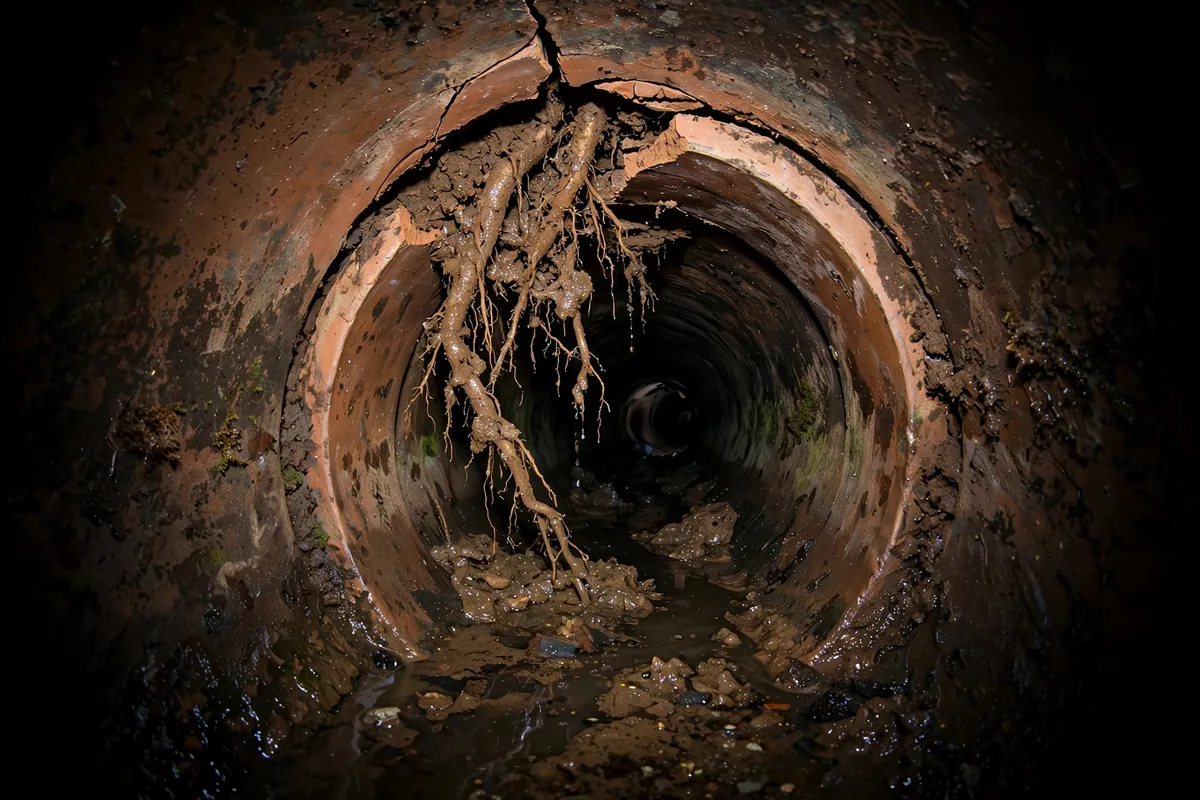
Speak generally about homes of that era on this side of the Peninsula and a pattern holds: supply lines of galvanized steel that have been quietly rusting from the inside, copper added in later remodels, and sewer laterals — some of them fiber pipe from the period — that have been underground for sixty years or more. Layered over that is the hill itself. Lots are sloped, foundations step down the grade, and mature trees stand over nearly every lateral. Tree roots are patient: they find the moisture at a lateral joint, work in, and within a few seasons the joint is a root ball with a pipe running through it.
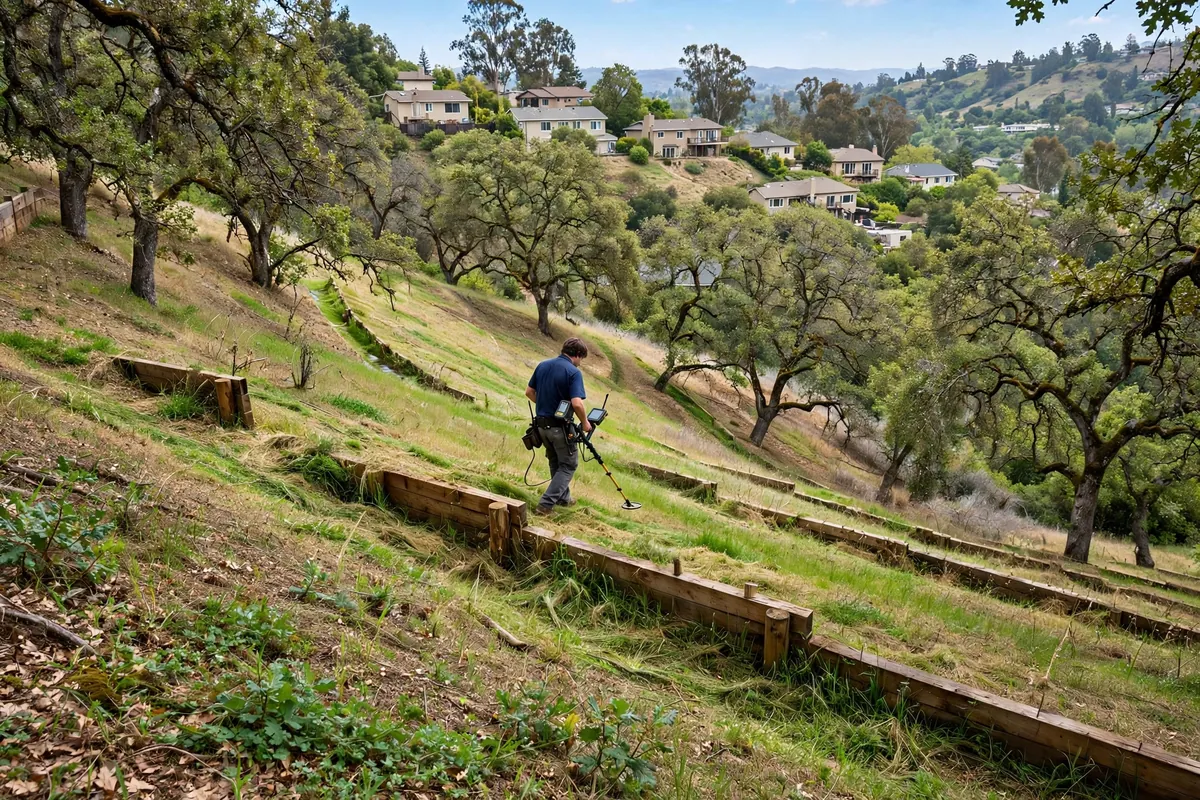
The slope changes how leaks behave, too. On flat ground, a leaking line usually announces itself close to home. On a hillside, escaping water follows gravity and the loose fill of the pipe trench, so it may surface ten feet downhill from the break — or not surface at all, just softening the slope as it goes. That is why our Emerald Hills visits start with electronic line tracing and pressure isolation. We want the mark on the pipe itself, not on the puddle it left behind.
County Address, City-Crew Service
Emerald Hills sits outside the city limits, but it is not outside our day. The area is one of the ten service areas laid out on our Redwood City leak detection homepage — same crew, same equipment, same upfront ranges as any address in the 94062.
Leak Problems We See Most in Emerald Hills
Roots, age and gravity — the hill's leak pattern is written by its laterals and its slopes.
- Root intrusion in sewer laterals — slow drains, gurgling fixtures and backups that return after every clearing
- Galvanized supply lines at end of life — rusty water, falling pressure and pinhole leaks at the threads
- Yard line leaks that surface downhill — a wet slope or a soggy lower terrace, well away from the actual break
- Underfloor leaks on stepped foundations — hillside crawl spaces hiding slow drips against framing
- Pressure stress on long runs — elevation change works on every fitting between the meter and the house
- Irrigation leaks on terraced lots — broken lines watering the slope instead of the planting
The expensive mistake on a hillside is digging where the water shows. The wettest spot is where the water ended up, not where it got out. Pinpoint first, and the repair stays small.
The seasons add one more stress up here. Bay Area clay soils swell when they are wet and shrink as they dry, and a hillside lot cycles through both every year. Buried pipes ride that movement: a joint opens a fraction, roots find the gap, and a lateral that ran clear in August is gurgling by February. It is also why we treat a single clearing cautiously. If the camera shows roots entering at a joint, clearing buys time — it does not close the opening they came through.
The same cycle explains a pattern Emerald Hills homeowners describe often: the leak that only shows in the wet season. A supply line with a small split can lose most of its water into dry summer soil without leaving a trace, then announce itself in the first month the ground is saturated and has nowhere left to put the water. If the same band of slope or the same terrace turns soggy every winter, that spot deserves a trace of the line above it — not another season of watching it.
Services We Run in Emerald Hills
The three services the hill asks for most:
Sewer Leak Detection
Camera inspection of older laterals — see the roots, the crack or the offset joint on screen before deciding anything.
Learn more →Water Leak Detection
Supply and yard line leaks traced across sloped lots, pinpointed on the pipe rather than at the puddle.
Learn more →Crawl Space Leak Detection
Underfloor leaks on stepped and raised foundations, caught before they soften framing or feed mold.
Learn more →Emerald Hills ZIP Code: 94062
Emerald Hills addresses carry ZIP code 94062 — shared with Edgewood Park and the upper streets of Farm Hill, and fully covered by our crew.
Neighboring areas on the same routes:
Working a Hillside Lot: How the Visit Runs
A sloped lot changes the order of operations. Distance, elevation and gravity all get a vote — here is how we take them out of the guessing.
Most Emerald Hills visits start at the street, where the meter usually sits well below the house. That distance matters: the yard line on a hillside lot can run a long way uphill, passing under driveways, terraces and planted slopes before it reaches the foundation. With everything in the house off, the meter tells us whether water is escaping at all. Shutting the house valve then divides the property in two — if the meter stops, the leak is in the house or under it; if it keeps turning, the loss is somewhere along that long uphill run.
For the yard run, we trace before we listen. An electronic trace maps the line's actual path up the slope — older lines rarely run where a straight guess would put them — and the acoustic gear then walks that path, narrowing the sound of escaping water to a single stretch of pipe. The mark goes on the line, at the depth the trace reports, not at the wettest patch of hillside below it. On a lot where one wrong dig can mean a torn-up terrace, that order of work is the whole point.
Inside the house, stepped foundations mean the crawl space may sit at two or three levels, and we check it in sections. A drip that starts under the upper level can travel along framing and show itself a room away and a level down, so each section gets its own look and its own pressure reading. Drains get a camera through the cleanout, which is how root entry at a lateral joint gets proven rather than assumed.
Elevation gets measured along the way, because it changes the pressure story: a home high on the hill lives with lower incoming pressure than the street, and long uphill runs stress every fitting between the meter and the last tap. The written report pulls it together — where each line runs, what the tests showed, where the mark is, and which repairs the evidence actually supports, each with its range.
It takes a little longer than a flat-lot visit, and honestly, it should. The hill hides leaks better than any neighborhood we serve — a proper Emerald Hills visit is built to take that advantage away.
Emerald Hills Leak Questions
Emerald Hills is not part of Redwood City. Do you still serve it?
Yes. Emerald Hills is unincorporated San Mateo County, but its homes carry Redwood City mailing addresses and ZIP code 94062, and the area is part of our everyday service routes. The same detection process, the same written report and the same pricing ranges apply as at any address inside the city.
What are the signs roots have gotten into my sewer lateral?
Slow drains throughout the house, gurgling sounds from toilets or tubs, sewage smells in the yard, and backups that keep coming back after clearing are the classic signs. A camera inspection through the cleanout confirms it — you see the roots and the joint they entered on screen, which tells us whether a clearing or a repair is the right call.
Why did water show up downhill from where the leak actually is?
On a hillside lot, escaping water follows gravity and the path of the pipe trench, so it often surfaces several feet — sometimes a whole slope — away from the break. Chasing the wet spot alone leads to digging in the wrong place. We trace the line electronically and listen along its run, so the pinpoint lands on the pipe, not on the puddle.
What does a detection visit cost in Emerald Hills?
A basic leak inspection typically runs $100–$300, electronic acoustic detection $300–$800, and underground locating $500–$1,200, depending on the home and the lot. Hillside properties sometimes need a longer line traced, and we tell you that up front. Detection is always priced separately from the repair.
How long does a leak detection visit usually take?
Most residential visits take one to three hours, depending on the size of the home and how many lines need isolating and testing. Long yard runs and hillside lots can take longer. You get a marked location and a written summary the same visit either way.
The roots were cleared last year and the drains are slow again. Why?
Because clearing cuts the roots back but leaves the opening they grew through. Roots regrow toward moisture, so a joint that admitted them once will usually admit them again within a season or two. A camera inspection shows whether the joint is simply open or the pipe itself is cracked or offset — an open joint can be repaired at that section, while a crushed pipe needs replacement, and the footage tells you which one you are actually paying for.
Can a leaking pipe really damage my hillside?
Yes, slowly. Water escaping underground softens the soil it passes through, and on a slope that can mean a terrace that starts to slump, a retaining edge that leans, or a wet band that never dries out between rains. The damage is rarely sudden, which is exactly why it gets missed. Stopping the water at the pipe is the fix, and the pinpoint is what keeps that repair small.
Does the elevation of my lot change my water pressure?
It can. Pressure drops as water climbs, so a home high on the hill may see noticeably lower pressure than the street below it — and long runs of older, narrower pipe reduce it further. During a visit we can read the pressure at the house, which separates a pressure problem from a leak problem. The two feel similar at the tap, and they have very different fixes.
On the Hill, the Puddle Lies. The Pipe Doesn't.
If water is showing up where it should not — or the drains keep slowing no matter how often they are cleared — let us trace the line and put the mark where the leak actually is. Ranges up front, report in writing.
Call (650) 632-9185 Request a Quote