Slab Leak Repair Options: Spot Repair, Reroute, or Repipe?
The detection visit is done and the spot is marked: a water line under your slab is leaking. Now comes the decision that actually costs money — and the right slab leak repair Redwood City, CA homeowners choose depends less on the leak itself than on the condition of everything around it. There are three main ways to fix an under-slab leak — open the slab and repair the spot, abandon the buried line and reroute a new one, or replace the piping with a repipe — plus a fourth, epoxy lining, that fits some homes. This guide walks through how each one works, what each typically runs, and the honest math for choosing between them. If nobody has pinpointed your leak yet, start with our slab leak detection page — every option below assumes the leak has been located first, because repairing on a guess is how floors get opened twice.
Option One: Spot Repair — Open the Slab Once, at the Marked Spot
A spot repair is exactly what it sounds like: open the concrete at the pinpointed mark, cut out the failed section of pipe, fit a new section, pressure-test it, then patch the concrete and restore the floor. Published ranges put a spot repair at $1,500–$3,500, with concrete restoration adding $500–$1,500 depending on the finish. It is the right choice when this is the first leak, the rest of the line tests sound, and the spot sits somewhere reachable — a garage, a utility area, a floor you were planning to redo anyway. Its weakness is arithmetic, not workmanship: the pipe on either side of the patch is the same age as the piece that failed, so a spot repair buys a fix for this leak, not a verdict on the system.
Option Two: Reroute — Abandon the Buried Line
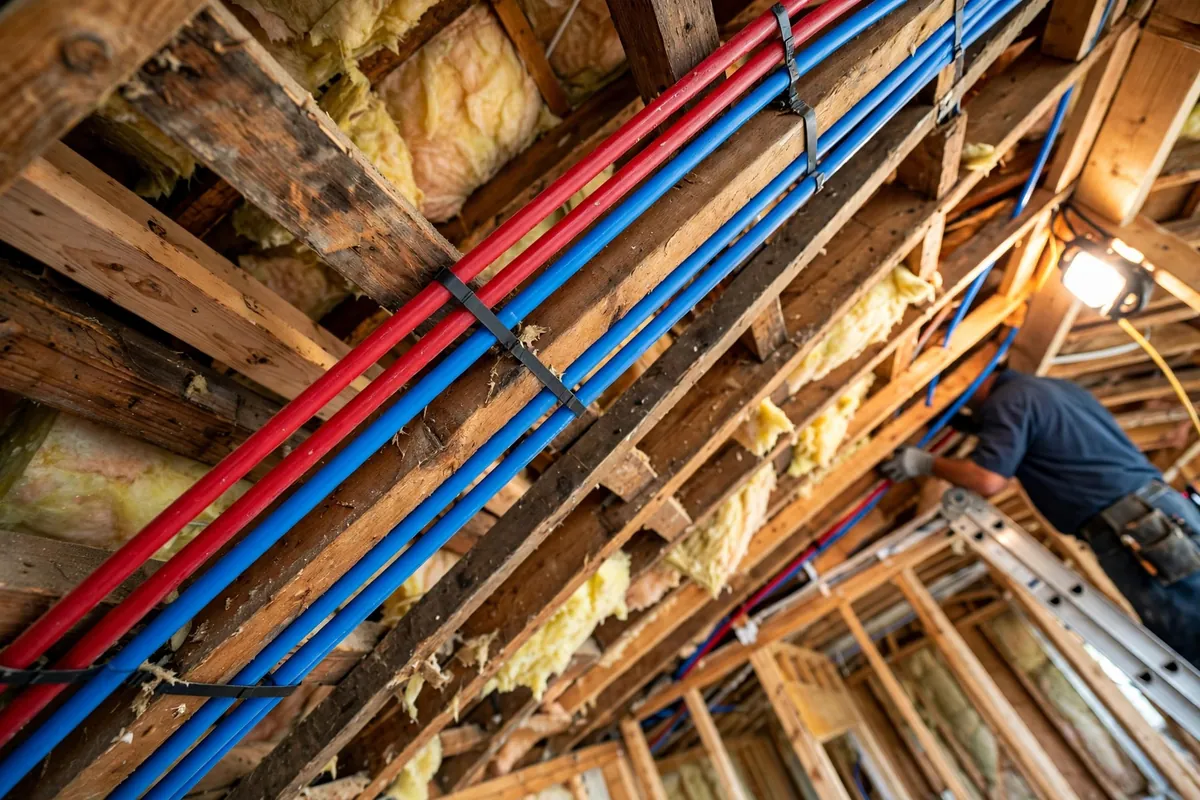
A reroute leaves the leaking line in the slab, capped and retired, and runs a new line overhead — through walls, the attic, or around the home — at a typical $2,000–$4,500. Nothing gets jackhammered, which matters a great deal if your floors are finished hardwood or tile, and it matters even more on a post-tension slab (more on that below). Every future issue on that run is now in an accessible place instead of under concrete. The trade-offs are cosmetic: some drywall patching where the new line passes, and in cold climates attic runs carry a frost risk — here on the Peninsula that risk is minimal. A reroute is usually the sweet spot for a second leak on the same run, or a first leak in a bad location.
Option Three: Repipe — Replace the System, Not the Symptom
A repipe replaces the water lines themselves — one failing branch, or the whole house. Published ranges for a partial or full repipe run $1,500–$15,000, with most whole-house jobs landing around $7,500; for a 2,000 sq ft home, HomeGuide figures put PEX at $2,000–$4,000 and copper at $8,000–$16,000. It is the most disruptive option and the most final one: new pipe everywhere, sized and routed for access, with permits pulled through the City's Building Division and the work inspected. A repipe earns its price when leaks have appeared in more than one place, when pressure and water quality complaints point to system-wide corrosion, or when you are renovating anyway. Our repiping service page covers materials and process in detail.
The Three Options, Side by Side
Side by side, the pattern is simple: the less concrete involved, the more the price buys permanence instead of access. Use this table as the starting point for the conversation, not the end of it.
| Option | Typical Range | Opens the Slab? | Best When |
|---|---|---|---|
| Spot repair | $1,500 – $3,500 | Yes — one small, marked opening | First leak; the rest of the line tests sound |
| Reroute | $2,000 – $4,500 | No | Post-tension slab, finished floors, repeat leak on one run |
| Epoxy lining | $1,000 – $3,000 | No | Pipe is structurally sound and a lining suits it |
| Repipe | $1,500 – $15,000 | Usually no — walls and attic access | Multiple leaks; the system is at end of life |
Restoration is the line item homeowners forget: after any spot repair, patching the concrete runs $500–$1,500, and refinishing the floor above it is separate. Reroutes and repipes trade that cost for drywall patching, which is almost always cheaper and easier to blend.
The Honest 5-to-10-Year Math
Over ten years, the cheapest option is the one that ends the pattern — and a second leak on the same system changes the answer completely. Price it out. One spot repair, all-in with restoration, is roughly $2,000–$5,000 and done. But a second spot repair within five years — new detection, new opening, new restoration — brings the running total to roughly $4,000–$10,000, and at the end of it you still own the same aging lines everywhere else. A reroute at $2,000–$4,500 removes that entire run from the equation permanently. A repipe costs the most on day one and then the question is simply closed. The working rule in the trade, and the one we give our own customers: after the second leak on the same system, stop paying for spots and price the reroute or repipe seriously. Homeowner forums are full of the endgame version of this lesson — owners who capped the under-slab lines and re-routed the whole system after repeated pinhole leaks, and wished they had done it two repairs earlier.
The bars are illustrative, built from the published ranges above with restoration included for spot repairs. Your home's version of this chart depends on pipe age and condition — which is exactly what the detection report should tell you before anyone quotes a fix.
Before Anyone Opens Your Slab: The Post-Tension Warning
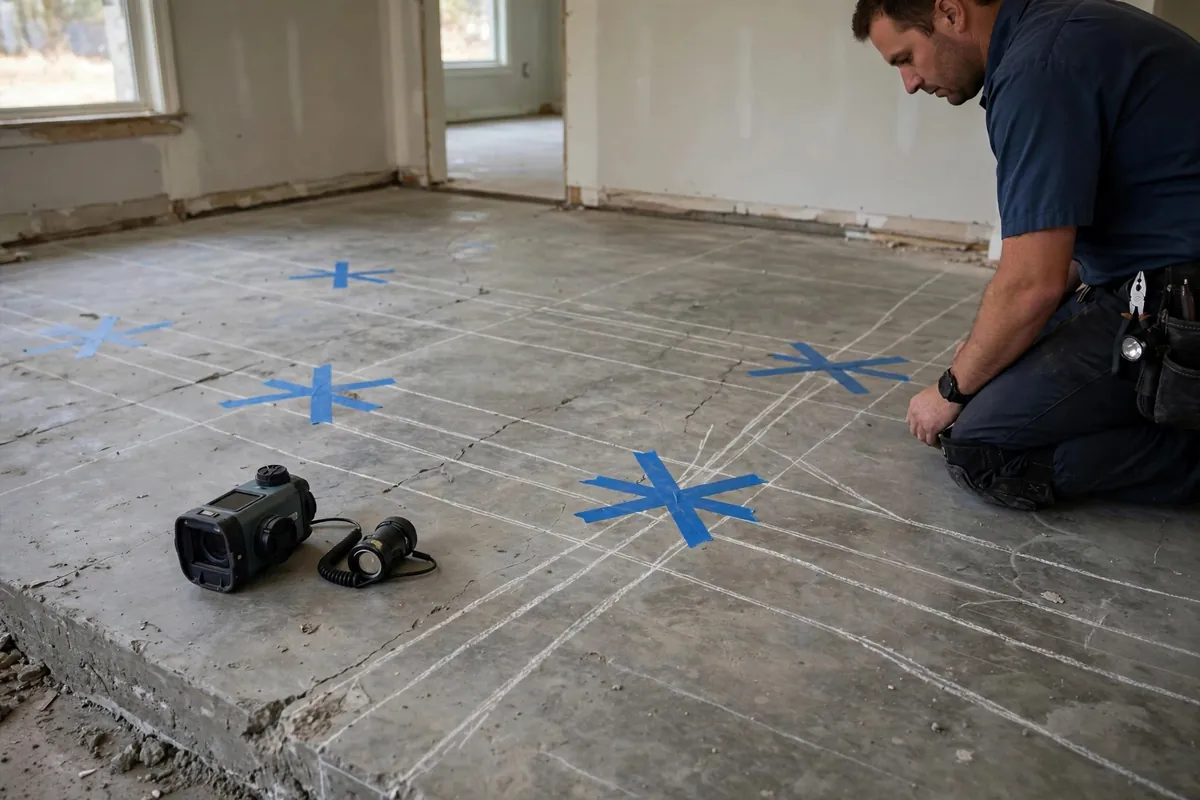
Many Peninsula slabs — newer construction especially — are post-tensioned: steel cables run through the concrete under extreme tension, and cutting one blind can snap it, seriously damage the slab, and turn a plumbing repair into a structural one. It is a fear homeowners raise in forums for good reason. The safeguard is unglamorous and absolute: the slab gets scanned and the cables and rebar marked before any opening, and cutting happens only inside the mapped window over the pinpoint. If a contractor proposes to jackhammer your slab without a pinpoint and a scan, stop the job. It is also one more argument for the reroute on post-tension homes — the option that never touches the slab at all.
What Insurance Typically Covers — and What It Doesn't
On a standard homeowners policy, the pattern is consistent: the resulting sudden water damage, and the tear-out and restoration needed to reach the pipe, are typically covered — while repairing the failed pipe itself usually is not, and slow gradual leaks are the most common denial. Read that again, because it shapes the paperwork: insurance is about the damage, not the pipe. That is why the detection report matters. A dated report that names the source, documents the damage, and distinguishes a sudden failure from a long-term seep is the document a claim runs on, and it is another reason detection and repair get quoted separately. For what the detection side itself runs, see our leak detection cost guide. Every policy differs, so treat this as the shape of the conversation to have with your insurer — with the report in hand — not a coverage promise.
Slab Leak Repair Questions, Answered
Which slab leak repair option is cheapest over ten years?
For a first leak in an otherwise sound line, a spot repair is cheapest today and often for good. The math flips when leaks repeat: two spot repairs in five years can run $4,000–$10,000 all-in with restoration, while a reroute at $2,000–$4,500 removes that run permanently and a repipe resets the whole system. Count the pattern, not just the first invoice.
Can a post-tension slab be opened safely?
Yes — with scanning first. Post-tension slabs hide steel cables under extreme tension, and cutting one blind can snap it and damage the slab. A competent contractor scans and marks cables and rebar, then opens only the mapped window over the pinpointed leak. Never let anyone jackhammer a slab that has not been pinpointed and scanned.
Will homeowners insurance pay for slab leak repair?
Typically the resulting sudden water damage and the tear-out and restoration needed to reach the pipe are covered, while the pipe repair itself usually is not — and slow, gradual leaks are the most common denial. A dated detection report documenting the source and timeline is the document the claim runs on.
Is epoxy pipe lining a real alternative to opening the slab?
It can be, at $1,000–$3,000 in published ranges, because it coats the inside of the existing pipe instead of replacing a section. It only suits a pipe that is still structurally sound — a collapsed or heavily corroded line needs a mechanical repair, a reroute, or replacement. It is an option to price, not a shortcut around diagnosis.
A second leak appeared months after my spot repair. Now what?
Treat it as the system talking, not bad luck. A second failure on the same aging line is the classic signal to stop repairing spots and price a reroute of that run — or a repipe if other lines are the same age — against the cost of a third and fourth repair.
How much does the concrete work add on top of fixing the pipe?
Plan on $500–$1,500 to patch and restore the concrete after a spot fix, with the breaking itself running $500–$3,000 on larger jobs. That is the quiet half of the bill many quotes bury — and exactly why the opening should be small and pinpointed. Ask for restoration as its own line item so you can see what the concrete, not the plumbing, is costing you.
A plumber blamed our hard water for the pinholes in our slab lines. Is that plausible here?
Not really. Redwood City's water comes from the Hetch Hetchy system and is some of the softest in California — about 8 mg/L hardness, which is very soft. Pinholes in older buried copper here are driven by age, water pressure, and soil contact, not by mineral-heavy water. If a quote leans on the hard-water story, it was probably written for a different city's water supply.
If we reroute, what happens to the old line under the slab?
It gets capped at both ends and abandoned in place. Nothing about a reroute requires digging the old pipe out — the new line simply takes a different path, overhead or through walls and attic space, and the buried run is taken out of service for good. The slab is never opened, which is the whole point of choosing a reroute.
Slab Leak Located? Get the Options Priced Properly.
Spot repair, reroute or repipe — we price all three against your pipe's actual condition, in ranges, in writing, so the ten-year math is in front of you before you choose.
Call (650) 632-9185 Request a Quote