Winter Rain Leaks in Redwood City: Why Hidden Leaks Show Up When the Storms Roll In
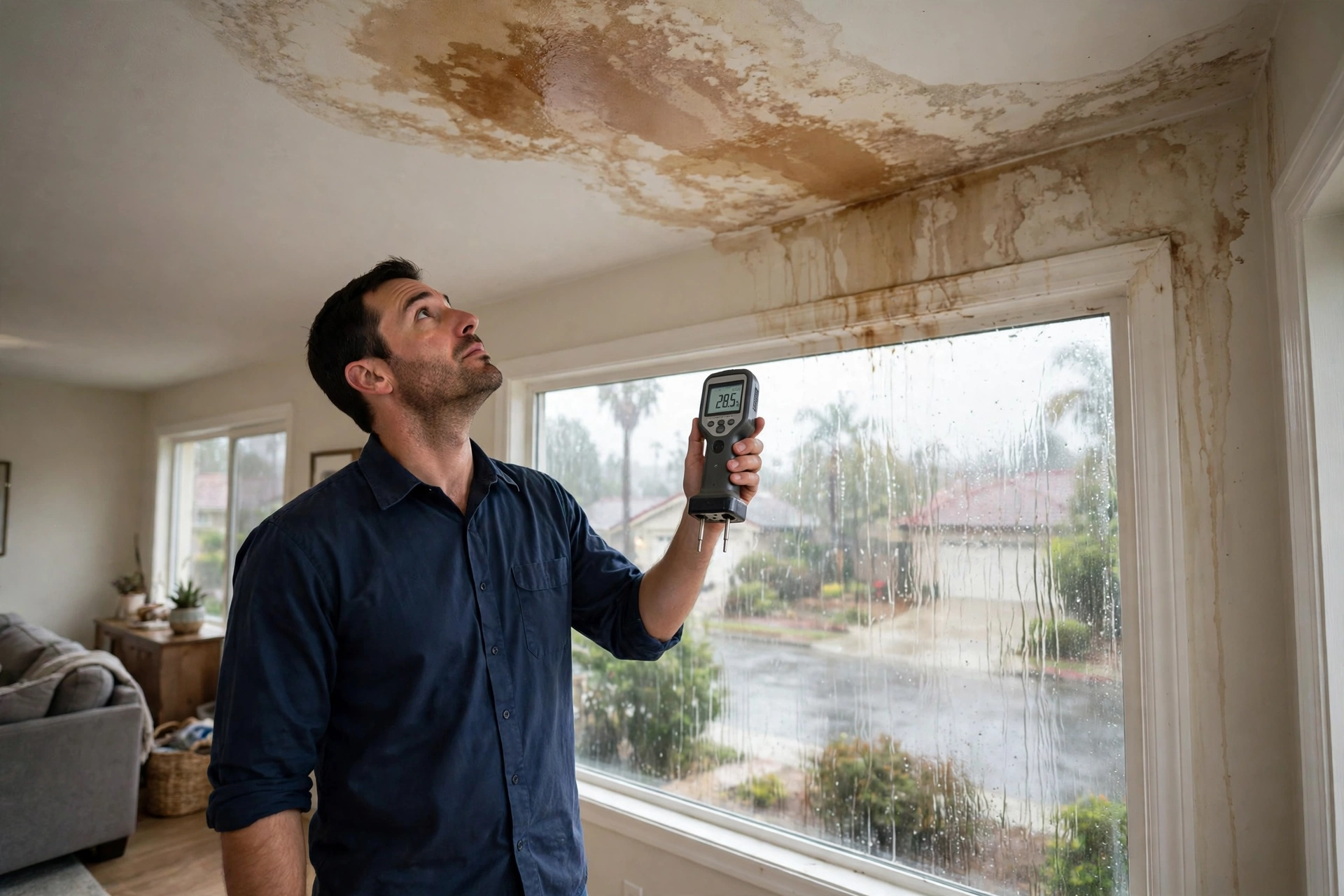
Every year it happens the same way in Redwood City: the first real storms of the season roll in off the Bay, and our phones light up. A ceiling stain that was not there in October. A crawl space that suddenly has standing water. A water bill that jumps even though nobody is watering a lawn in November. It feels like the rain caused a dozen leaks at once — but what the rain actually does is reveal the leaks that were quietly there all along.
Redwood City's rainy season runs roughly November through March, and it changes the ground your pipes live in. Soil that was dry and forgiving in September becomes saturated and heavy. The water table rises. Storm drains and sewer laterals run full. Pipes that had a hairline crack, a tired joint, or a root pressing in from outside suddenly have water pushing back at them from both directions. This guide walks through the places winter leaks show up most, how to tell them apart, and which checks you can run yourself before calling anyone — including the same water meter leak test we start with on every visit.
Reason 1: Saturated Soil Finds Every Buried Crack
A buried supply line or sewer lateral spends the dry months leaking into soil that can absorb the loss without a trace. Once that soil is saturated, the water has nowhere to go but up and out — which is why a yard leak that ran silently all summer announces itself in December as a patch of lawn that never dries, a soft spot near the sidewalk, or water standing in the crawl space after a storm.
Saturated soil also moves. Redwood City has plenty of older homes in neighborhoods like Mount Carmel and Stambaugh Heller where lines have been in the ground for decades, and wet-season soil pressure works on every joint. If your meter test shows water moving with everything off and the wettest spot in the yard is nowhere near a sprinkler head, you are most likely looking at the kind of buried leak our underground leak detection work is built for: find it acoustically, mark one spot, and dig once instead of trenching a yard on a guess.
Reason 2: The Ceiling Stain — Roof Leak or Plumbing Leak?
The most common winter call we get starts with a brown ring on a ceiling. Half the time it is the roof: rain finds a failed flashing or a cracked vent boot and drips onto the ceiling below. The other half, it is plumbing that has been leaking for months and the stain only now soaked through — and the two problems need completely different fixes from completely different trades.
The timing test separates them. Note when the stain grows. If it darkens during a storm and stops when the rain stops, suspect the roof path. If it grows on dry days, or right after showers, baths, or laundry runs, suspect a supply or drain line above it. We walk through this test in full on our wall and ceiling leak detection page. What matters most is not to paint over the stain or cut the ceiling open on a hunch — a moisture meter and a thermal camera read the pattern through the drywall and point at the source before anyone makes a hole.
Reason 3: Crawl Spaces Collect What the Yard Cannot Hold
Many Redwood City homes sit over a crawl space, and in a wet winter that space becomes the low point for every drainage problem on the lot. Gutters that overflow, downspouts that dump at the foundation, a yard that slopes the wrong way — all of it ends up under the house, where it mixes with any plumbing leak that happens to be dripping from above the soil line.
Standing water under a home is never just a nuisance. It soaks piers and framing, feeds mold, and rusts out the very pipes that run through it, which is how one wet season turns into next year's leak. If you smell mustiness after storms or see water through a crawl space vent, our crawl space leak detection visit separates the two questions that matter: is this water coming from the sky and the soil, or from a pipe — and if it is a pipe, exactly which one and where.
Reason 4: Full Sewers Push Back Through Weak Joints
During a heavy storm, the city's sewer mains carry rainwater infiltration on top of normal flow. Older laterals — and Redwood City has plenty of clay laterals still in service — feel that pressure at every crack and root joint. A line that drains fine in August can back up in January, not because something new broke, but because the weak point finally met a full pipe.
The warning signs are specific: a floor drain or downstairs shower that gurgles during rain, a cleanout that shows standing water, backups that only happen in storms. That pattern points at the lateral, and the honest next step is a camera, not a cable — our sewer camera inspection guide shows what the camera finds and what each finding means for the repair decision.
The Three Checks to Run While It Is Still Raining
1. The meter test. Turn everything off, watch the meter's low-flow indicator. If it moves, water is escaping somewhere — the rain does not fake that result.
2. The stain watch. Outline a ceiling stain lightly in pencil and date it. Growth during rain versus growth on dry days tells you which trade to call first.
3. The crawl space look. With a flashlight at the access hatch — no need to crawl in — look for standing water and listen for dripping. Water under the house after a storm is information; water under the house a week after the rain stopped is a leak.
If the checks point at a hidden leak, that is the moment our work starts. When you are finding leak detection specialist in Redwood City CA, what you are really hiring is the method — acoustic listening, thermal imaging, pressure isolation — and our homepage lays out how we use them. The pricing logic is in our leak detection cost guide, in ranges, before you ever book.
Who Calls Us When the Storms Arrive
Homeowners in Emerald Hills and Farm Hill whose hillside lots send water toward the foundation. Families in Roosevelt and Friendly Acres watching a ceiling stain grow through a storm week. Landlords whose tenants report a musty smell that only shows up in winter. And buyers in escrow during the rainy months, who — wisely — want the hidden lines checked while the weather is stress-testing them for free.
We are based at 280 Convention Way, we have done this work in Redwood City since 2018, and winter is when we would want our own homes checked. A leak found in November is a repair. The same leak found in April is a repair plus a season of water damage.
Winter Rain Leak Questions, Answered
Why do leaks seem to show up as soon as the rain starts?
Most were already there. Rain raises the water table and saturates the soil around buried lines, so a small underground leak suddenly has somewhere visible to go — a soggy patch, a crawl space puddle, a stain that grows. Storms also surcharge sewer lines, pushing existing cracks and root joints to back up. The rain rarely creates the leak; it reveals it.
How do I tell a roof leak from a plumbing leak during a storm?
Timing is the tell. A stain that grows while it rains and stops when the rain stops usually points to the roof or flashing. A stain that grows on a dry day, or while a shower or appliance runs, points to plumbing. Our wall and ceiling page walks through the timing test in detail, and a moisture reading at the stain settles most arguments.
Should I wait for dry weather before getting a leak checked?
No — wet weather is actually the best time to find a rain-driven leak, because the path the water takes is active and traceable. Waiting lets saturated soil and wet framing sit longer, and a stain that dries out can take its evidence with it. If water is moving now, that is when detection works best.
Rain Found a Leak at Your Place? Get It Pinpointed.
If the stain is growing, the crawl space is wet, or the meter will not sit still, the water is going somewhere — and every wet day adds to the damage. One visit marks the exact spot and prices the fix in ranges, in writing.
Call (650) 632-9185 Request a Quote