Sewer Camera Inspection in Redwood City: See the Line Before Anyone Digs
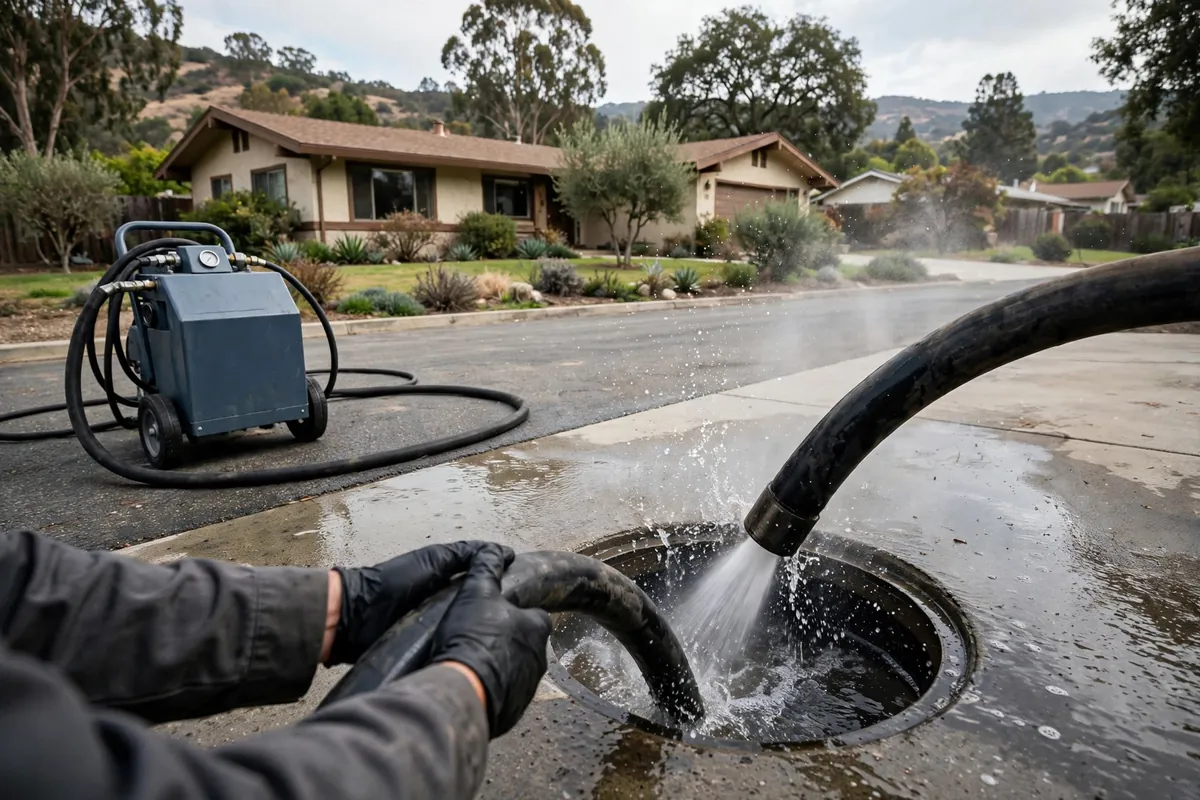
Every other pipe in your house can be inspected by opening a cabinet door. The sewer lateral — the buried line that carries everything from your home out to the street main — cannot. It sits under the yard, out of sight, and in most Redwood City homes it has been there since the house was built. A sewer camera inspection is the one way to actually look at it: a waterproof camera on a flexible rod, fed through the cleanout and run the full length of the line, with the picture on a screen in front of you and every problem located from above ground. This guide covers what that picture usually shows, what the inspection costs, and how to choose between a camera run and another cleaning.
How a Camera Run Works
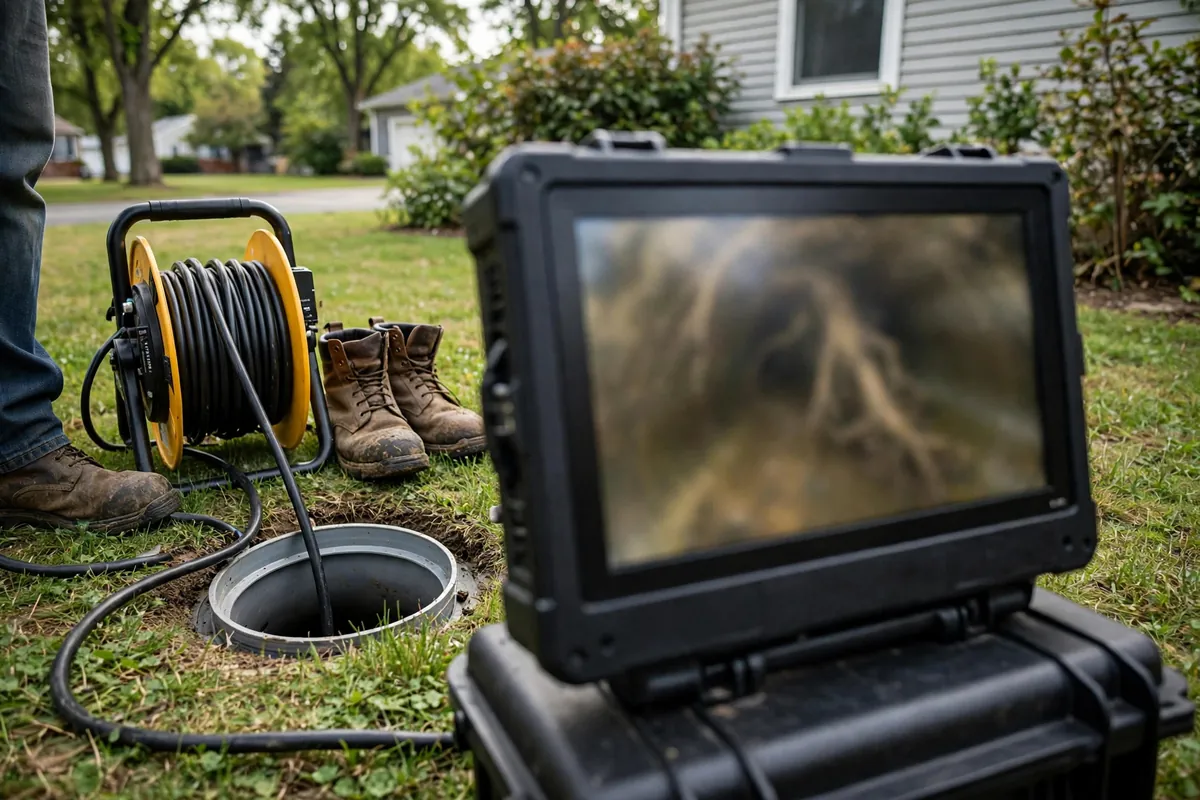
The camera enters through the cleanout or another access point — no digging, no demolition — and travels the lateral while the footage records. A good run is narrated as it goes: you watch the same screen the specialist does, hearing what each joint, stain and shadow means while there is still time to ask. As the camera passes a problem, a signal from its head is picked up at the surface, so the spot and its depth get marked on the ground above it. You finish with three things: the video itself, a marked map of anything found, and the findings in writing with repair options priced in ranges. That is the standard our own sewer camera work is held to, and it is the standard to hold any company to.
What the Camera Finds in Redwood City Laterals
Five findings account for almost every problem we document in this city's lines — most of which are cast iron and clay-era pipe that has been in the ground for sixty years or more around Downtown and the postwar tracts.
Root intrusion is the most common. Tree roots find the moisture at a pipe joint, slip through a gap hair-thin at first, and grow into a net that catches everything flowing past. Early roots are a cutting-and-treatment job; left alone, the same roots thicken until they deform and crack the pipe wall itself.
Offset joints are sections that have shifted out of line as the ground moved — clay soil that swells and shrinks with the seasons, and earth that settles year by year. An offset snags debris, leaks at the joint, and gives roots their opening.
Bellied sections are low spots where the pipe has sunk and water permanently pools. Solids settle in the belly instead of washing through, which is why some homes clog on a schedule no matter how carefully the drains are treated.
Corrosion and scale are the cast-iron story: the inside of the pipe roughens and thins over decades until the bottom of the line is effectively gone. The camera shows that flaking surface years before the first collapse — but only if somebody looks.
Cracks and breaks come from soil pressure, root force and plain age. A cracked section leaks sewage out and groundwater in, washing soil away from around the pipe, and it is the finding that most often turns a cleaning call into a repair conversation.
And the good-news finding: grease and buildup, where the pipe itself is sound and decades of kitchen use are the whole problem. That line does not need a repair quote. It needs a cleaning.
What a Sewer Camera Inspection Costs
A camera inspection typically runs $271–$1,725 — a national range drawn from thousands of verified projects, published on our sewer service page and in our cost guide. Most straightforward residential laterals land in the lower half of it, with the final figure driven by the length of the run and how the line is accessed. Bay Area labor can run above national figures, so treat the range as the planning number it is, and expect the range for your specific line to be quoted before the camera goes in.
Set that against the alternative it replaces. An excavation quoted from symptoms alone can run into five figures, and homeowner forums are full of owners who paid it for lines that turned out to need a cleaning or a two-foot repair. If the footage shows a sound line, you have bought proof — and the end of the guessing. If it shows a failure, you have the exact spot, the depth, and video evidence to take to any plumber for an honest competing quote.
Camera or Cleaning: Which Does Your Line Need?
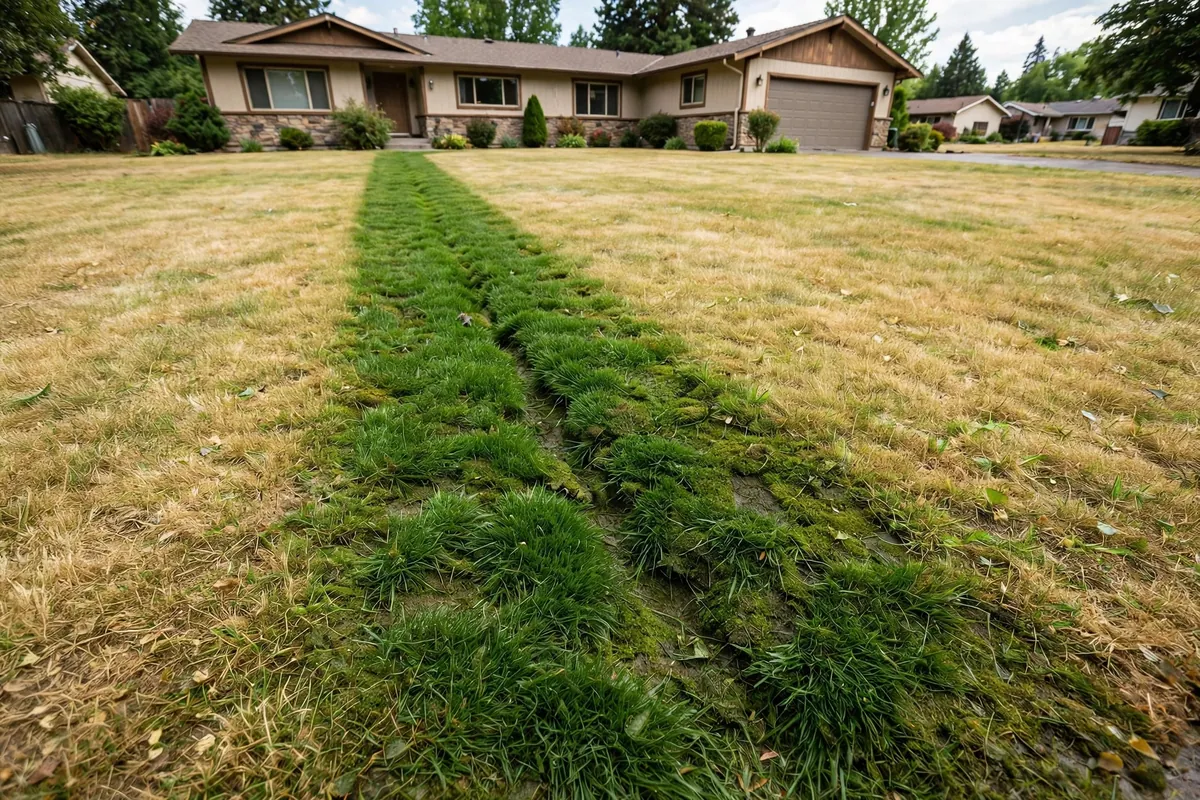
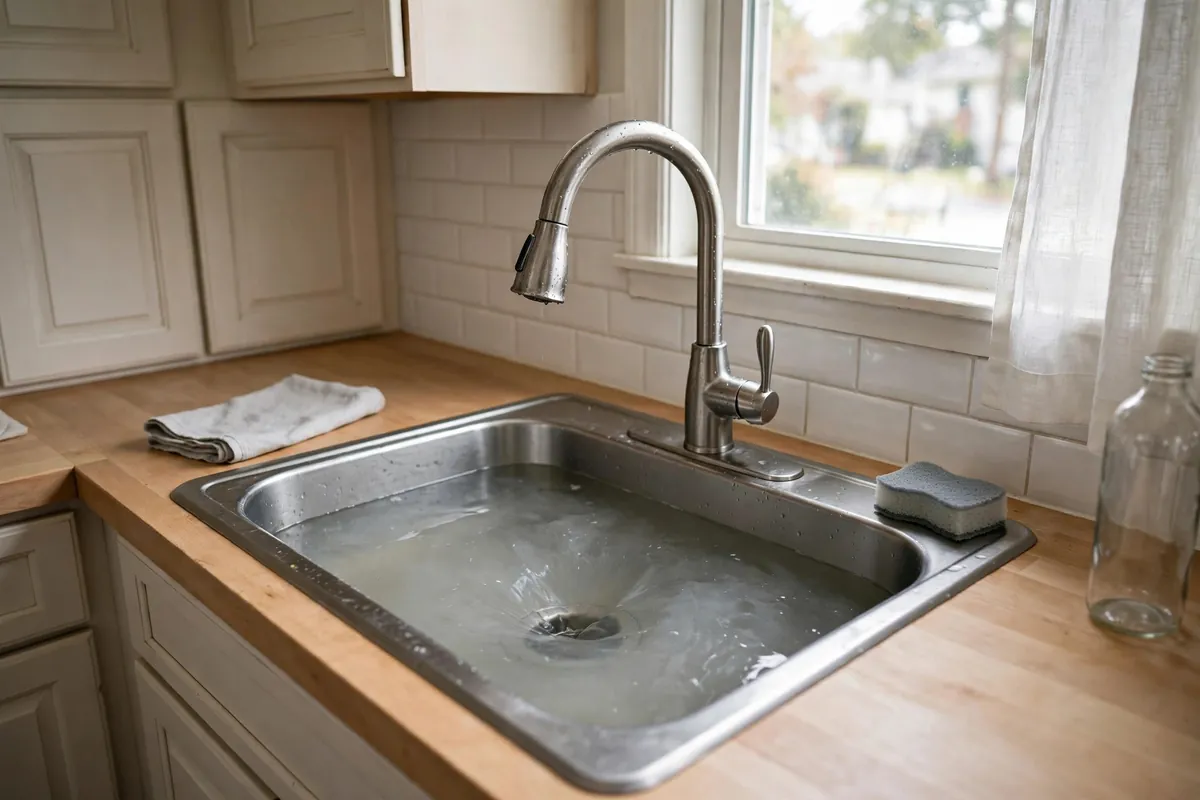
The rule we give every customer is simple. The first clog is a cleaning — something went down the drain that should not have, and a cable or a hydro-jet clears it. A drain that clogs twice in the same spot is telling you something. By the third time, it is asking to be looked at properly: something inside that pipe is catching everything that passes, and cabling it again is paying rent on a problem instead of fixing it. That is the moment the camera earns its fee, because it answers the question a cable never can — not where is the clog, but why does it keep forming.
Whole-house symptoms skip the queue entirely. Several drains slowing together, gurgling when the washer empties, or a backup into the lowest tub in the house means the restriction lives in the main line, and a main-line question is a camera question from the start. Our drain cleaning crew works the same way: clean what is dirty, scope what keeps coming back, and never sell one as the other.
The Lateral at Sale Time: The Pipe a Home Inspection Cannot See
A standard home inspection covers the house you can walk through — roof, structure, visible plumbing, the fixtures you can turn on. It does not run a camera inside the buried lateral, which is why a failing line can pass an inspection completely unnoticed and introduce itself in the second month of ownership, as a backup. With 61% of Redwood City homes built between 1940 and 1980, the lateral under a typical purchase has spent 45 to 80 years in the ground.
That is why a pre-purchase leak check treats the lateral as its own item: scoped on camera, with the footage and a written report the buyer can negotiate from — a repair, a credit, or a second priced quote. Two practical notes from that page bear repeating. Book it early in escrow, because access and scheduling, not the camera run, are what take time. And ask for the video as a condition of the visit: footage is evidence everyone at the table can look at together, while a summary line is one person's opinion.
Why Homeowners Choose Footage Over Opinions
Sewer work attracts the biggest quotes and the vaguest explanations in the plumbing trade, because the evidence is buried. A camera changes who holds the proof — and homeowners who have been quoted a shovel on a hunch tend not to go back to guessing.
- You watch it yourself. The run is narrated on screen as it happens — roots, corrosion, an offset, a belly — with the problem located and its depth marked on the surface above it.
- One run replaces months of repeat calls. A single camera pass separates a dirty line from a failing one, ending the cycle of paying for clearings that teach you nothing about the pipe.
- The video travels. Your footage works everywhere the question goes next: a second quote, a negotiation in escrow, an insurer's file, or your own records for the next owner.
- Pricing follows the evidence. Because the finding is documented before anyone quotes, the options you are shown are the ones your pipe actually presents — in ranges, in writing.
Sewer Camera Questions, Answered
How much does a sewer camera inspection cost?
Typically $271–$1,725 nationally, based on thousands of verified projects, with most straightforward residential lines landing in the lower half of that range. The length of the run and how the line is accessed move the figure. It is priced as its own job, separate from supply-line locating and from any repair the footage leads to — and you hear the range for your line before the camera goes in.
Do I get to keep the camera video?
Yes. The footage of your line is yours — to keep with the house records, to show a second plumber if you want another quote, or to hand to a buyer, seller or insurer when the line's condition becomes part of a conversation. A scope that comes without video is an opinion; the video is what makes the finding evidence.
Can a camera inspection damage the pipe?
No. The camera head rides on a flexible push rod and enters through the cleanout or access point that is already there. Nothing cuts, scrapes or gets poured into the line, and the camera comes out the same way it went in. The pipe is exactly as it was — except that now its condition is documented instead of guessed at.
Recurring Clogs or a Line You Have Never Seen?
One camera run replaces every guess about what is happening under your yard — with footage, a marked spot and honest ranges for whatever the line actually needs.
Call (650) 632-9185 Request a Quote