Burst Pipe in Redwood City: What to Do in the First Hour
A burst supply line does not drip. It pours. A pressurized pipe can release hundreds of gallons an hour into walls, floors and framing, which means the size of a burst-pipe bill is decided less by the pipe than by the clock — how many minutes pass before the water stops. Most of the damage we walk into after a burst was not done by the failure itself. It was done in the first hour, while water kept moving and nobody was sure what to do first. This guide is the order we talk callers through on the phone, written down so it sits in front of you before you ever need it: the shut-off steps, the safety steps, and what should happen once help is rolling.
Step One: Stop the Water — Meter Valve or House Valve
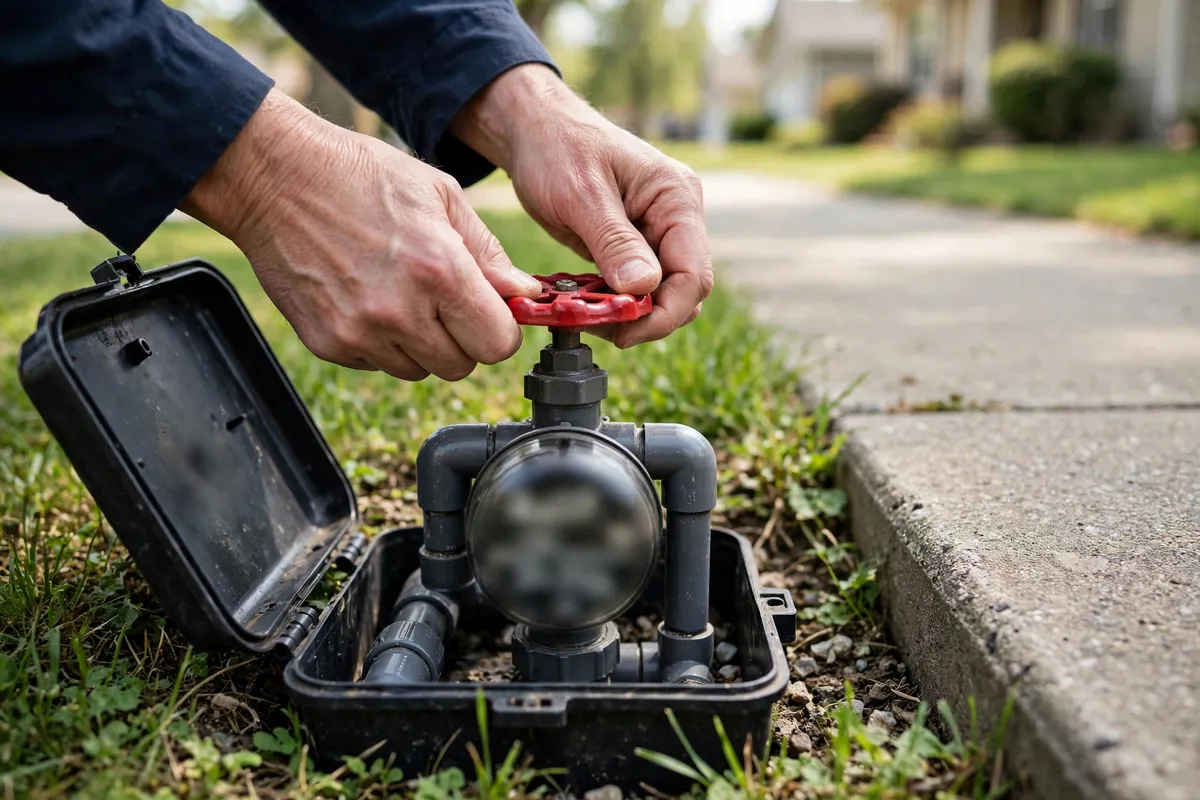
Your main shut-off is usually at the water meter near the street, or where the line enters the house by the front hose bib. Turn it clockwise until it stops. That single action converts a flooding burst into a contained repair job: everything after it is cleanup and fixing, not damage control. If you have a separate house valve that is closer and turns freely, use whichever closes first.
Two honest warnings from our emergency crew's experience. First, most homeowners have never touched their main valve before the night they need it in the dark — so find yours this weekend, confirm it turns, and show everyone in the house where it is. Second, the gate valves in many 1950s and 1960s homes seize or weep when finally forced. If yours will not budge, do not lean on it: a valve that snaps turns one break into two. Skip ahead, protect what you can, and call — the meter shut-off can be talked through over the phone while a crew is already on its way.
Step Two: Make the Wet Zone Safe, Then Drain the Lines
If water is anywhere near outlets, appliances or the electrical panel, switch off the breakers for that area before you wade in. Water and live electricity are the one combination in a burst-pipe night that is not negotiable. With the power question settled, open the lowest faucet in the house — a ground-floor tap or an outside spigot — and let the lines drain. Bleeding the pressure means the break slows to a stop instead of emptying the whole plumbing system through the hole, and it makes the house safer and drier for everyone who works in it afterwards.
Step Three: Protect What Water Ruins, and Photograph Everything
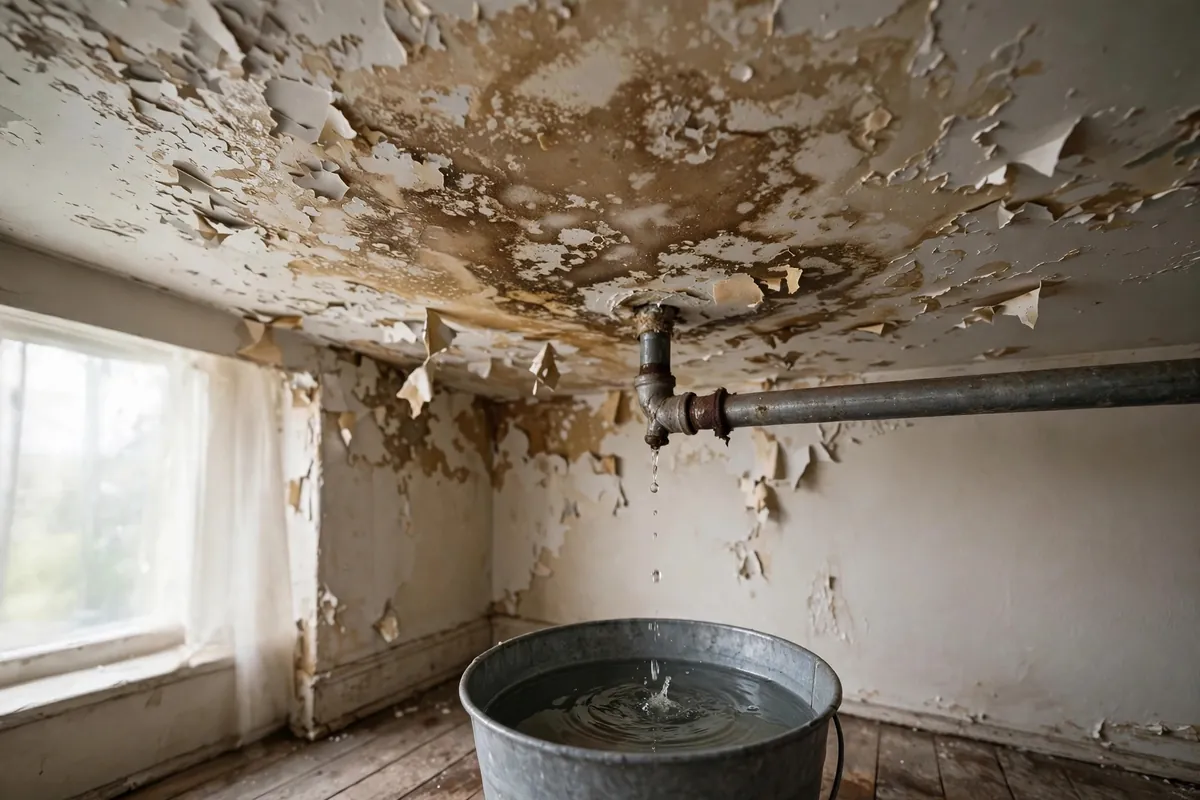
Move furniture, rugs and electronics out of the wet zone, and set a bucket under anything still dripping from a ceiling. Then take photographs — the room, the wet materials, the failed pipe if you can see it. They take thirty seconds now, and they are the first page of the claim file if this becomes an insurance conversation later: an insurer decides sudden-damage claims from documented evidence, and the earliest pictures are the ones that show the water while it was still an event, not a memory.
What Happens Once You Call
A proper emergency visit follows a fixed order, and it is worth knowing so you can recognise a good one. Stabilize first: the crew confirms the water is off, isolates the failed branch if the rest of the house can safely stay live, and gets the home usable. Pinpoint second: acoustic and thermal equipment finds the exact failure point, so the repair opens one spot instead of three. Quote the range third — in writing, before repair work begins; pinpointing falls in the standard ranges, a basic inspection at $100–$300 and electronic detection at $300–$800, and on cost the same transparency applies at 3 a.m. as at noon. Then repair or secure: most failures are fixed on the spot, and if the lasting answer is bigger — a reroute or a new line — the home is made safe and the job scheduled with the range locked in. Finally, document: you receive a written summary of the failure, the readings and the damage.
And If the Burst Is Under the Slab?
Sometimes the emergency announces itself as water pooling on floors, or a room that floods with no visible pipe anywhere. An under-slab burst is still a stop-the-water problem first — the steps above do not change — but the finding works differently: the line is located electronically before any concrete is opened, and the slab is scanned before it is cut, because many Peninsula slabs are post-tensioned and hide steel cables under extreme tension. That pinpoint-first discipline is the whole subject of our slab detection service, and on a burst it is what keeps a bad night from acquiring a structural problem as well.
Not Every Leak Is a Burst: The Honest Triage
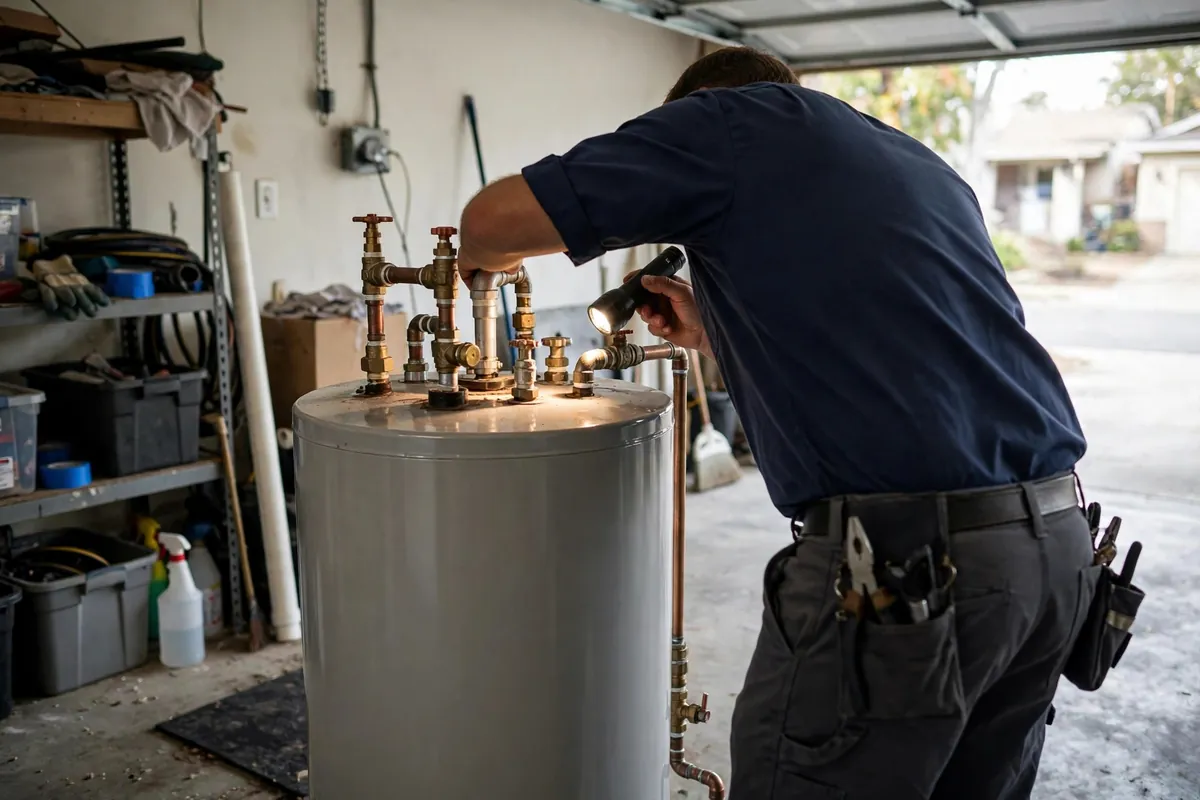
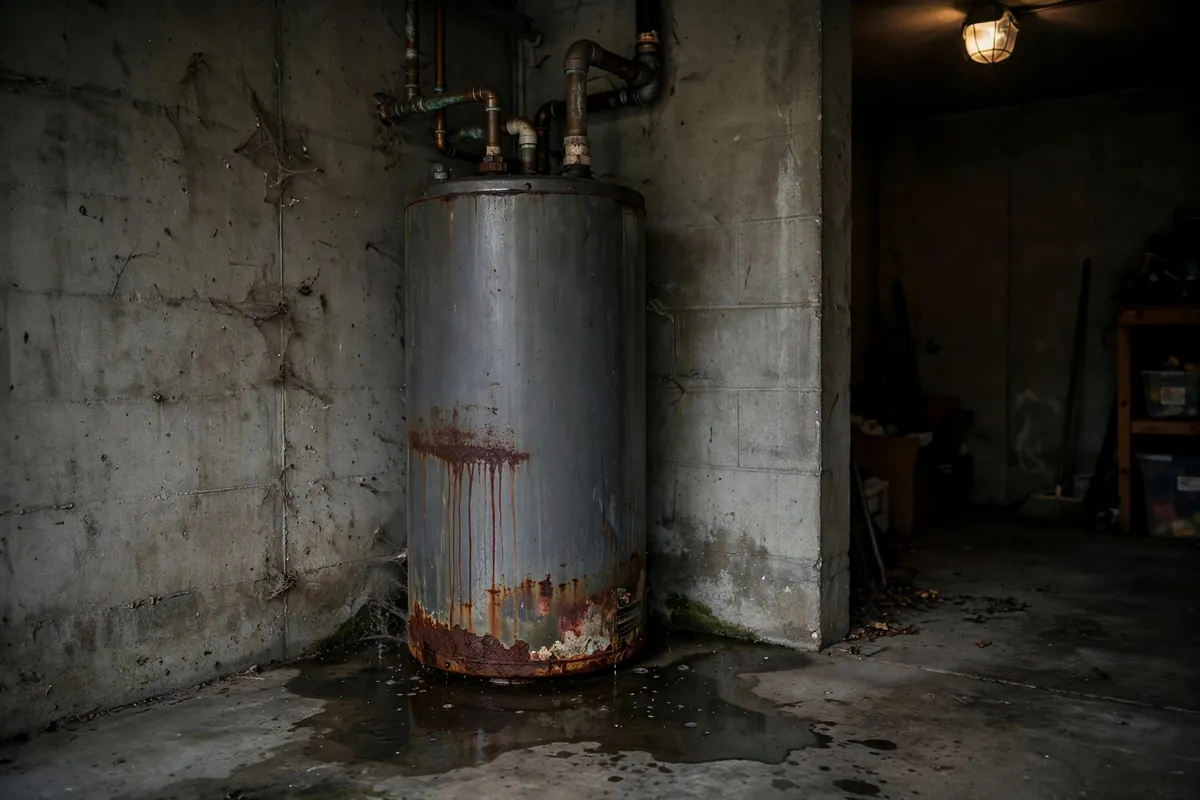
The other direction deserves the same honesty. A slow drip under a sink, a toilet that runs now and then, a damp patch that has not changed in weeks — none of those is a burst, and none needs a midnight call-out. They are hidden-leak problems, handled better on a scheduled visit, and if you phone us about one at 2 a.m. we will tell you exactly that rather than sell you panic. The line between the two is movement: water that is spreading, a shut-off that will not stop it, ceilings or walls actively getting wet — or a water heater flooding the garage — is an emergency. Water that is sitting still can usually wait for daylight and a calmer, cheaper visit.
Why Homeowners Choose the Crew That Answers
Nobody comparison-shops during a flood, and we do not expect you to. People remember the crew that picked up, told them which valve to close, and arrived with a plan — that is the whole reputation an emergency service trades on.
- A local specialist answers, day or night. When you call at 3 a.m., you reach our own crew here in the city — the people who will actually come out — not a call center in another state reading questions off a screen.
- First aid before we arrive. Shut-off, breakers, pressure drain-down — we walk you through them on the phone, because five minutes at the main valve can shrink a flood into a contained repair.
- Stop, prove, then quote. The water stops first, the source gets pinpointed second, and only then is the repair quoted — in a clear range, before a wrench comes out.
- The visit leaves evidence. You get a written record of the failure and the damage, which is exactly what an insurer asks for after a sudden water event.
Burst Pipe Questions, Answered
What should I do first when a pipe bursts?
Stop the water before anything else: close the main valve, usually found at the meter near the street or where the line enters the house by the front hose bib. Then switch off breakers for any area where water is near outlets or appliances, open the lowest faucet in the house to drain the pressure out of the lines, and move belongings out of the wet zone. Photograph the damage for your insurer, then call. The minutes spent at the valve are worth more than anything that happens afterwards.
Should I shut the water off before help arrives?
Yes, if you can do it safely — every minute the line runs is more water in the walls and floors. Close the main, then bleed the lines from a low faucet. One caution: if the only valve is corroded and will not budge, do not force it and risk turning one break into two. Move what you can out of the water's path, keep clear of water near outlets or the panel, and let the crew handle the valve when they arrive.
Does homeowners insurance cover burst pipe damage?
A burst pipe is the classic sudden-and-accidental pattern standard policies are built around: the resulting water damage, and often the cost of opening up access to the failed pipe, are the parts commonly covered. The pipe repair itself is usually treated separately, and slow leaks that developed over weeks are a different story — those are commonly denied as gradual deterioration. A written report documenting the failure and the damage is what your adjuster will ask for.
Water Moving Through Your Home Right Now?
Shut off the main valve, then call. Stopping the water in the first minutes is what keeps a bad night from becoming a bad month — and the crew that answers is local, around the clock.
Call (650) 632-9185 Request a Quote