Repiping a Redwood City Home: The Signs, the Materials, the Math
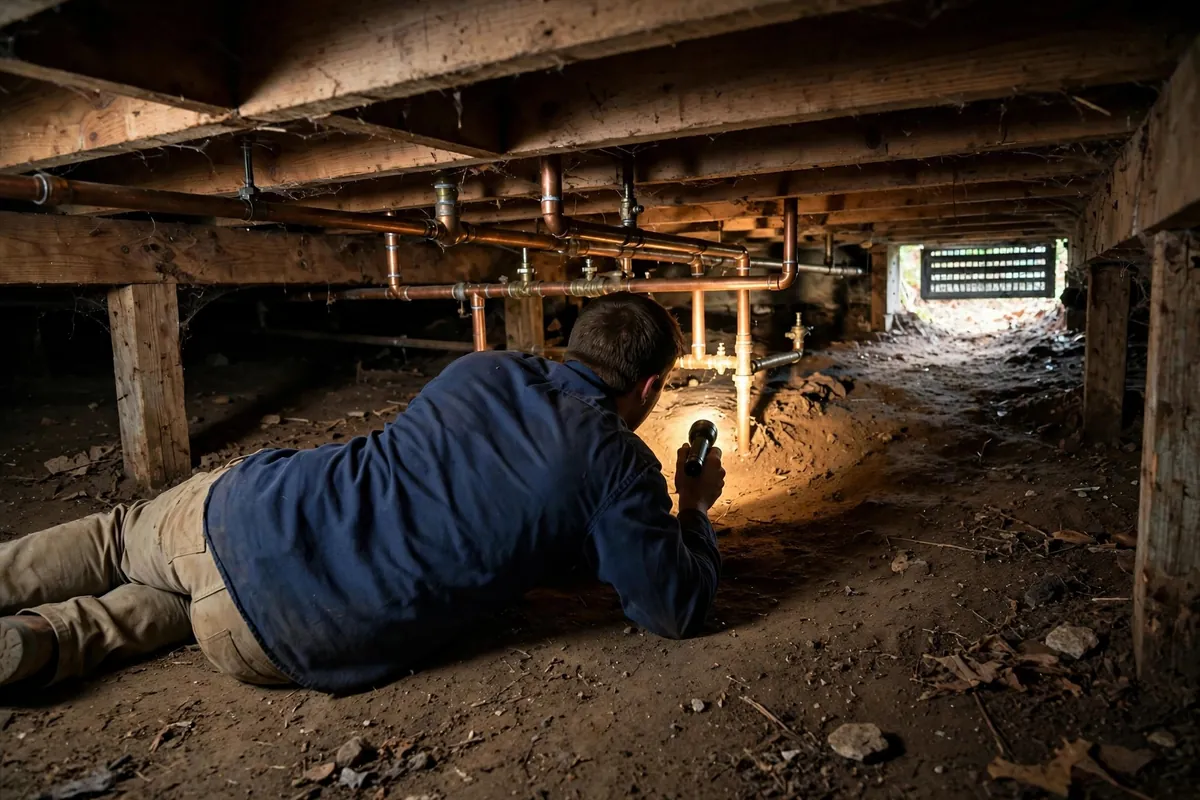
Nobody wakes up wanting a repipe. The decision arrives the way the leaks do — one at a time, until the pattern is impossible to unsee: a second pinhole on the same line, water that runs rusty after the house sits empty for a week, pressure that fades a little more each year. This guide lays out how that call gets made honestly. The signs that patching has stopped making sense. An even-handed comparison of PEX and copper. The permit and inspection facts for work in this city. And the five-to-ten-year arithmetic that decides between one more repair and replacing the lines outright — the same arithmetic published in our cost guide, applied to the biggest plumbing decision most owners ever face.
Five Signs the Pipe, Not the Joint, Is the Problem
Repeat pinhole leaks. One pinhole is bad luck; the second on the same line is a pattern, and the pipe is telling you the whole run is going the same way as the spots that already failed.
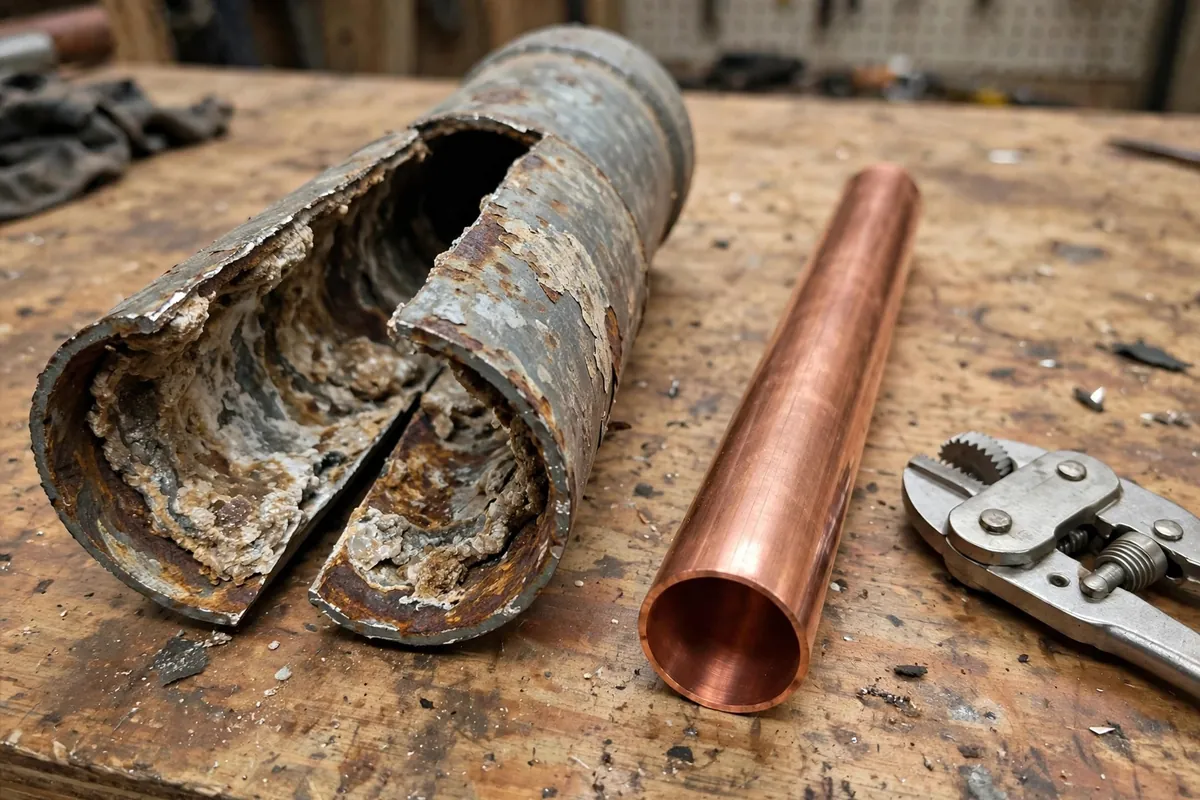
Rusty or discoloured water after the house sits unused — the first draw in the morning, or the first tap after a trip. That is galvanized pipe corroding from the inside, shedding its own wall into your water.
Pressure that keeps fading. Scale and corrosion narrow old lines from within, year by year, until showers weaken and tubs take forever — a whole-system symptom, not a fixture problem.
Galvanized-era plumbing. Supply lines installed before the 1960s are decades past their design life. In a city where 61% of homes were built between 1940 and 1980, a large share of houses are running on exactly that stock, or on early copper of a similar age.
A remodel already opening the walls. If the kitchen or bathroom is coming apart anyway, replacing the old lines inside those walls costs the least it ever will — the access is already paid for.
The Five-to-Ten-Year Math
Price the pattern, not the incident. A single slab spot repair typically runs $1,500–$3,500, with concrete restoration adding $500–$1,500. A reroute that retires one bad run runs $2,000–$4,500. Now run the honest projection: two or three spot repairs inside a few years, each with its own detection visit and its own patch in the floor or wall, adds up to the price of replacing the line outright — except at the end of it you still own every remaining foot of the old pipe. That crossover, where the repairs forecast to cost what the replacement costs, is the point where patching stops being thrift and starts being rent. Our companion guide works the same math through for under-slab leaks specifically, option by option.
PEX vs Copper: The Honest Comparison
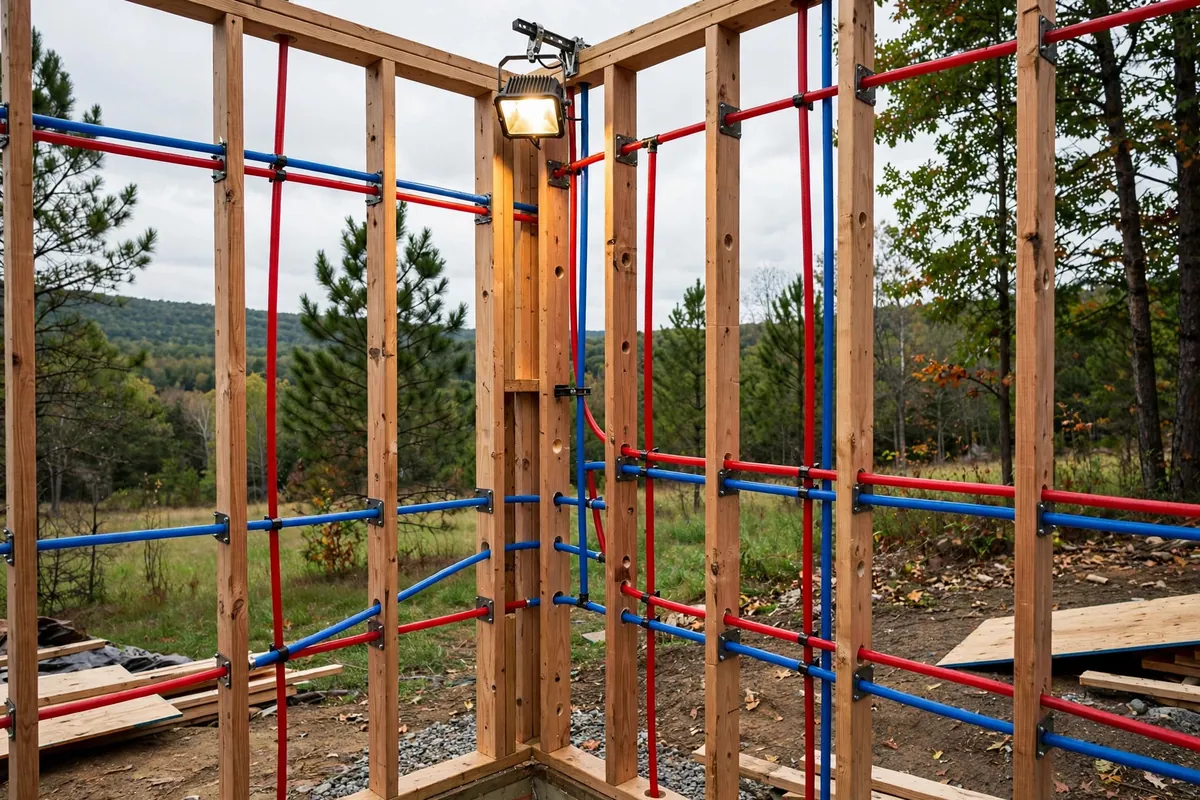
Both materials are proven. They differ on price, on how they go into a house, and on how they behave — and for most Redwood City repipes the numbers make PEX the sensible default, while copper earns its premium for owners who want the longest track record in the walls.
| Factor | PEX | Copper |
|---|---|---|
| Typical cost, 2,000 sq ft home | $2,000 – $4,000 | $8,000 – $16,000 |
| Installation | Flexible runs, fewer joints inside walls | Rigid, soldered joints at every turn |
| Behaviour in a cold snap | Expands slightly instead of splitting | Can split if water freezes inside it |
| Track record | Standard in new Peninsula construction | Decades of service in the city's older homes |
One local fact simplifies the choice less dramatically than people expect — and more honestly. The water here comes from the Hetch Hetchy system and is some of the softest in California, so neither material is being attacked by aggressive water. What ends the old lines in this city is age and pressure, and both PEX and copper answer that. A full repipe across published national guides typically runs $1,500–$15,000, with most homes landing around $7,500 and material choice the biggest lever in the range; Bay Area labour tends to price above national averages, which is why your number has to come from an on-site assessment, quoted as a range in writing.
Start With the Leak Pattern, Not a Sales Pitch
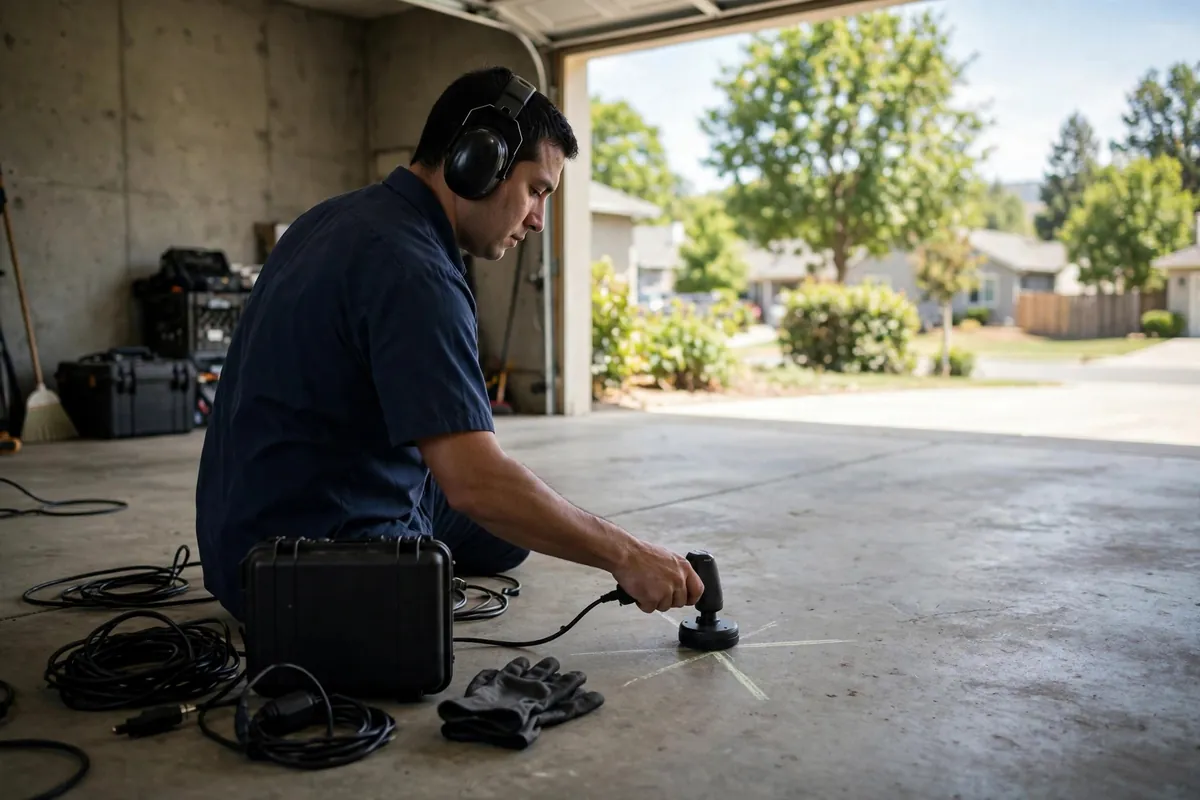
We are a detection company first, and every repipe we quote begins with locating the leaks and documenting the pattern — which lines have failed, and which are still sound. Sometimes that evidence acquits most of the house: the failures cluster on one branch, say the hot-water run under a crawl space, and replacing that branch while leaving sound lines in place cuts the cost dramatically. A partial repipe scoped to the lines that actually failed is often the right job. When the pattern is everywhere, the full conversation is the honest one. Either way, that diagnosis-first sequence is how our repiping work starts — and a company that quotes a whole-house repipe without it is selling you a scope it has not measured.
Permits, Inspection, and the License Question
Repiping is permitted work in this city. The permit is pulled through the City's Building Division at 1017 Middlefield Road, and the finished installation is inspected — treat that inspection as the protection it is, and expect it built into the schedule rather than waved away. California law sets the bar for who may do the work: plumbing contracting requires a CSLB C-36 license, mandatory for jobs of $1,000 or more in combined labour and materials. When you compare quotes, ask every bidder two questions — their C-36 number, and whether the permit is included in the price. The answers separate real contractors from handymen faster than any review page.
Where Slab Leaks Fit: Spot, Reroute, Repipe
Under-slab failures are where the three options meet most often. A spot repair opens the concrete at the pinpoint and replaces the failed section — right for a first leak in a line that otherwise tests sound. A reroute abandons the buried run and takes the new line overhead, never touching the slab at all — the sweet spot for a repeat leak on one run, finished floors, or a post-tension slab. A repipe closes the question for the whole system. None of the three should be priced before the failure has been located electronically and the surrounding pipe assessed, because each option is really a bet about the condition of everything around the leak — and bets about buried pipe should be placed on evidence.
Why Homeowners Choose the Crew That Measured First
A repipe is the largest plumbing decision most owners make, so the crew recommending it should be the one that measured the problem. Our recommendations start from the leak pattern across your own system — not from a sales target.
- The math, on paper. Repeated spot repairs are laid against the cost of replacing the run, in published ranges, so you can see the crossover point where patching stops making sense.
- Evidence you can inspect. The case for replacing any line is built from pressure tests and pinpoint records on your house — and the report is yours whether or not we do the work.
- Scope settled before walls open. What gets replaced, what stays, and what it runs are agreed in writing, in ranges, before anyone commits to a schedule.
- One local crew, start to finish. The specialists who found your leaks are the team that replaces the lines — based at 280 Convention Way and working in this city since 2018.
Repiping Questions, Answered
How do I know if I need a full repipe or just a reroute?
The rule of thumb we work by: one leak is a repair, but a line that has failed in two or more places is telling you the whole run is at the end of its life. A reroute replaces the one bad run and is often the right scope for a single failing branch; a repipe answers when the pattern shows up across the system. Either way the recommendation should start from the leak pattern — which lines failed, which tested sound — and you should be shown that evidence before deciding.
PEX or copper — which should I pick for my repipe?
For most homes here, PEX: published figures for a 2,000 sq ft home put it at $2,000–$4,000 against $8,000–$16,000 for copper, and its flexibility means fewer joints inside walls. Copper is the longer-proven material in this city's older homes and some owners prefer it on that record. One local fact simplifies the debate — the water here is soft Hetch Hetchy water, so neither material is being eaten by aggressive water. We price both for your house and explain the trade-offs plainly.
Will I have water during a repipe, and how long does it take?
Most single-family repipes are measured in days rather than weeks, and the work is sequenced in stretches — water is shut off while lines are swapped and is typically back on at the end of each day. Almost nobody has to move out: expect drop cloths, some noise and openings where the new lines run, but not a hotel. The exact schedule depends on the size of the home and whether lines run through slab, crawl space or attic, and it gets mapped out with you before starting.
Tired of Patching the Same Old Lines?
Start with the pattern, not a pitch: one visit documents which lines have failed and which are still sound, and the repair, reroute or repipe decision follows from that evidence — quoted in ranges, in writing, with no repipe sold where a reroute would do.
Call (650) 632-9185 Request a Quote